
How to Find Good Restaurant Employees
TL;DR
The best restaurant employees are often the hardest to find because they are already employed and rarely apply through traditional job postings. Restaurants that combine referrals, proactive sourcing, structured hiring, and faster follow-up consistently attract stronger candidates and build more stable teams.

Helgi



Most restaurant managers assume that finding better employees starts with attracting more applicants. In reality, many of the strongest restaurant employees never apply for open positions. They are already working, hear about opportunities through colleagues, and only consider changing jobs when the right restaurant reaches them.
Finding good restaurant employees means looking beyond job boards. Restaurants that consistently build strong teams rely on referrals, local industry relationships, proactive sourcing, and structured hiring processes that help them identify qualified candidates before competitors do.
Why the Best Restaurant Employees Rarely Apply
One of the biggest misconceptions in restaurant hiring is that the best candidates are actively searching. While job boards generate applications, many experienced servers, bartenders, managers, and line cooks already have jobs. They move because they hear about a better opportunity, not because they spend hours browsing job listings.
That changes how restaurant managers should think about recruiting. Success depends less on waiting for applications and more on creating opportunities for qualified candidates to discover your restaurant before they begin actively looking.
For operators trying to get ahead of restaurant staffing gaps before they become a service problem, this shift changes everything about how recruitment should be approached.
Word of Mouth Still Drives Restaurant Hiring
Despite advances in recruiting technology, word of mouth remains one of the strongest sources of restaurant talent. Experienced hospitality professionals often recommend former coworkers, managers reconnect with employees they have worked with before, and kitchen teams frequently bring trusted colleagues into new restaurants.
These recommendations carry weight because they come from people who understand the pace and expectations of the hospitality industry. A referral is often based on reliability, teamwork, and performance under pressure, qualities that are difficult to identify from a resume alone.
Restaurants that encourage referrals and maintain positive relationships with former employees naturally expand their hiring network over time. That network often produces more dependable staff than relying exclusively on public job postings.

Job Boards Are Only One Piece of the Puzzle
Job boards continue to play an important role in restaurant recruitment, especially when filling multiple open positions quickly. They increase visibility and connect restaurants with active job seekers who are ready to interview.
The limitation is that job boards only reach candidates who are actively searching. Many highly qualified restaurant employees never enter that pool because they are already employed. Restaurants that rely exclusively on job boards limit themselves to one segment of the hiring market.
The strongest hiring strategies combine job postings with referrals, local networking, social recruiting, and understanding how to source candidates proactively. That broader approach creates more opportunities to connect with qualified candidates before another employer does.
Where Restaurant Managers Find Their Best Employees
The strongest restaurant hires rarely come from a single recruiting channel. Managers who consistently build great teams use multiple sources because different roles attract candidates in different ways. A line cook with years of experience may come through a referral, while a front-of-house employee may discover an opportunity through social media or a hospitality job board.
Some of the most effective places to find strong restaurant employees include:
- Employee referrals from current and former team members
- Local culinary schools and hospitality programs
- Restaurant-focused job boards
- Social media and neighborhood community groups
- Industry networking events
- Previous applicants who were a good fit but not hired at the time
The real goal is reaching people who have the right experience, availability, and attitude for your restaurant, not just posting the same opening in more places and hoping the right person applies. Managers looking for additional hiring ideas for restaurants often find that combining these recruiting channels produces stronger results than relying on one source alone.
Make Your Restaurant Worth Choosing
Finding qualified candidates is only half of the challenge. The best restaurant employees have options, and they evaluate restaurants just as carefully as restaurants evaluate them. Competitive pay matters, but it is rarely the only deciding factor. Predictable schedules, supportive managers, opportunities to grow, and open communication all influence whether someone accepts an offer and stays. Restaurants serious about reducing restaurant staff turnover know that the hiring conversation starts long before an offer is made.
Employer reputation plays an equally important role. Restaurant employees talk to one another. A positive workplace culture and fair management practices often travel through word of mouth long before a job posting reaches potential employees. OneTeam helps restaurants stay consistent at every stage of that first impression, from how quickly a candidate hears back to how clearly the role is communicated before day one. Over time, that reputation does more recruiting work than any job board ever will.

Finding Better Employees Is Only the Beginning
Attracting more applicants does not automatically produce better hires. Restaurants still need a consistent way to identify which candidates are most likely to succeed. When every manager screens resumes differently, or interviews focus on different criteria, hiring quality becomes inconsistent.
Building screening consistency helps restaurants make better decisions regardless of how candidates were sourced. Using the same evaluation criteria for every applicant makes it easier to compare experience, availability, and job fit while reducing the influence of rushed decisions made during busy service periods.
Managers who want to compare options before committing to a platform can start by reviewing the best AI recruiting software built specifically for the hospitality industry.
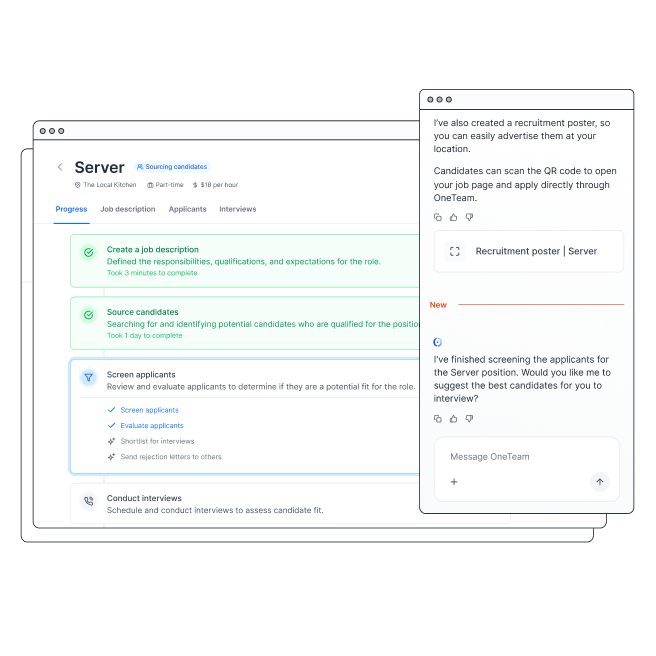
This is where hiring technology can support managers rather than replace them. OneTeam uses an AI job description generator and AI candidate screening to help restaurants identify qualified candidates faster. Its AI hiring software reduces the manual work that slows hiring down, so managers spend less time reviewing applications and more time speaking with people who are genuinely worth considering. The result is a hiring process that is more organized, more consistent, and better equipped to make faster hiring decisions without sacrificing hiring quality.
Great Restaurant Teams Are Built Before the Hiring Rush
The managers who never seem to scramble when someone quits are not lucky. They built something before the seat went empty. Past applicants are organized. Former staff are reachable. The local hospitality community knows their name. None of that happens overnight, and none of it happens during a dinner rush. It is the work that gets done between vacancies that determines how fast the next one gets filled.
Last-minute restaurant staffing pressure is almost always a preparation problem dressed up as a timing problem. When a candidate pool already exists, the decision becomes who to hire rather than who is available. That shift from reactive to deliberate is where hire quality improves, tenure increases, and the turnover cycle finally starts to slow. The right restaurant staffing software keeps that pool organized and accessible without adding another manual task to an already full plate. AI hiring assistant for restaurants connects sourcing, screening, and communication in one place so the process runs before the pressure starts.
FAQ


No setup fees.
No long-term commitment.
Create your account and start hiring.
