
8 Creative Hiring Ideas for Restaurants That Work
TL;DR
Hiring ideas for restaurants should solve a time problem, not just an applicant shortage. Avoid waiting until staff quit, posting on the wrong job boards, or handling everything manually. Use referrals, write honest job descriptions, and rely on technology to streamline sourcing and screening.

Helgi



Every time someone walks off the floor for good, you lose two to four weeks before a replacement even starts. That gap costs more than just labor. Most advice tells you to post more, interview faster, and follow up sooner, but that misses the real issue.
In competitive markets like New York City, where job openings move fast, having a solid recruiting strategy matters more than posting more often. This guide covers hiring ideas designed for restaurant managers already running at full capacity.
8 Creative Hiring Ideas for High-Volume Restaurants
Finding good staff is one of the hardest parts of running a restaurant. This is especially true for restaurant owners dealing with a constant labor shortage and fewer qualified job seekers. These eight ideas are practical, specific, and easy to act on without adding more to your plate.
1. Use staff referrals to find candidates faster
Your team members already know good people working in restaurants across New York City. A simple referral program offering a $100 to $200 bonus, paid after 90 days, gives them a real reason to make introductions. That alone cuts down the time you spend looking for candidates.
2. Write job descriptions that are specific and direct
Start your job posting with the hourly wage at the top, so applicants do not have to search for it. If your restaurant offers health insurance, say so in the first few lines. Benefits like that are uncommon in the industry, so listing them early makes your posting stand out. You can also use a job description generator to build a clean, structured post faster.
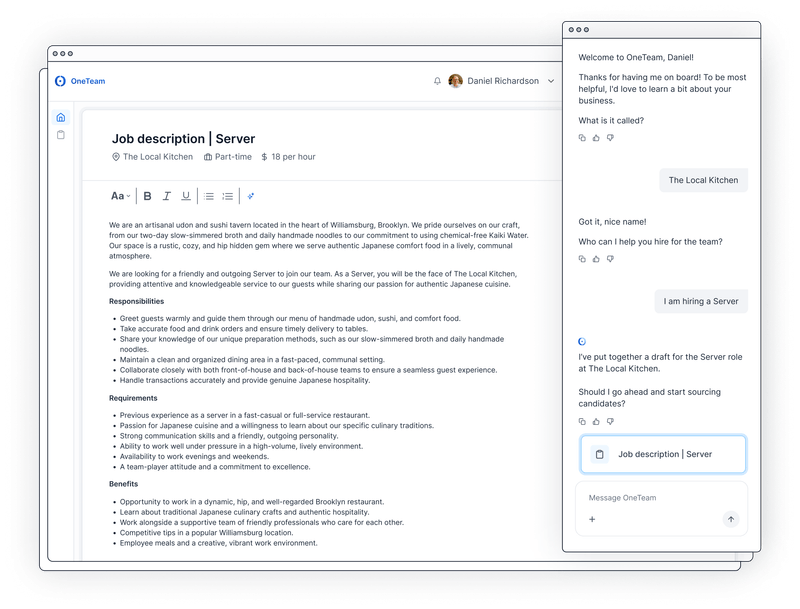
Be honest about the schedule and what a busy shift actually looks like. Candidates who know what to expect before they apply are more likely to proceed with the hiring process. If you are staffing multiple roles, learning about AI job descriptions for restaurant staff can save you time across the board. That kind of clarity also helps you fill open positions faster.
3. Post where restaurant workers actually look for jobs
In a labor shortage, where you post matters more than how often you post. Restaurant owners who rely only on general job boards often get unqualified applicants who have never worked a shift. Posting your job listings on restaurant-specific job boards helps attract candidates who already understand the role.
4. Use social media to reach passive job seekers
Many people working in the restaurant industry are open to better opportunities but never actively seek them. A simple post on your restaurant's social media reaches those people, especially if it shows what working at your restaurant actually looks like day-to-day. Ask your current team members to share open roles on their own pages for even wider reach.
5. Make your application process quick and simple
If your application requires downloading a form or opening a desktop, most candidates will quit before finishing it. A short mobile form asking for a name, phone number, and preferred role is enough to start the conversation. The goal is to open a line of communication, not to collect a stack of paperwork up front.
OneTeam keeps the process simple by letting candidates apply directly from their phones in under a minute. From there, you can manage responses, schedule interviews, and track applicants all in one place. If you want to move even faster, read up on AI candidate screening for faster hiring decisions to cut down your shortlisting time.

Pro Tip: Responding within 24 hours of receiving an application keeps good candidates from accepting another offer. Slow follow-up is one of the most common reasons restaurants lose qualified applicants. If you are looking at the bigger picture, these tips on how to improve your restaurant hiring process fast are worth bookmarking.
6. Keep a short list of candidates before you need one
Restaurant owners who wait until someone quits to start hiring lose two to four weeks before a new hire even starts. Keep a short list of past applicants you liked but had no job openings for at the time. A short message every few months keeps them warm without much effort. In a labor shortage, that list is worth more than starting from scratch each time.
7. Let technology handle the sourcing and screening for you
Reading through 80 resumes for a single server role pulls a manager off the floor for hours. Restaurant hiring software can post to multiple job boards at once and flag the strongest applicants before you open your inbox. Automated candidate-sourcing software keeps the process running in the background, even during a dinner rush.
For restaurants that want those hiring tasks connected in one workflow, ai hiring software can help manage sourcing, screening, candidate communication, and interview coordination without adding more manual work.
8. Ask every candidate the same three or four questions
Consistent interview questions make it easier to compare candidates fairly after a busy interview day. Unlike the hiring process in other industries, you do not need a complex system. A simple 1-5 rating on reliability and attitude is enough to make a fair comparison. Focus on how they handle a rush, then write down your impressions right after the conversation while they are still fresh.
Stop Scrambling Every Time Someone Quits
Good hiring ideas for restaurants are not about doing more. They are about having the right things in place before the next person quits. Referrals, honest job posts, and targeted boards do the work for you when they are set up in advance.
What makes that even easier today is that you now have tools that use AI candidate sourcing to find qualified applicants for you. You no longer need to manually review every resume or chase candidates for a time slot. OneTeam is built to do exactly that for restaurant managers, so you spend less time in your inbox and more time on the floor where you are actually needed.
FAQ


No setup fees.
No long-term commitment.
Create your account and start hiring.
