
How OneTeam´s Candidate Sourcing Finds Better Restaurant Candidates
TL;DR
Most restaurants wait for candidates to apply and sort through whoever responds. OneTeam sources candidates across multiple channels simultaneously, filters for fit from the start, and surfaces the strongest applicants first so managers spend time on decisions rather than sorting. The result is better hires, faster.

Lyuba



The restaurants with the lowest turnover share one trait that has nothing to do with pay or schedule flexibility. They source candidates instead of waiting for them. Inbound applications are a passive strategy dressed up as a hiring process, and passive strategies produce average results in a labor market this competitive, particularly for the high-turnover front-of-house and back-of-house roles that open most often.
The operators who consistently land strong restaurant staff are reaching qualified candidates before a posting even goes live, not sorting through whoever responds after. The reason is simple. Hiring quality is determined by candidate quality long before a manager reviews a resume or conducts an interview. The restaurants that consistently make strong hires start by building a stronger candidate pool. OneTeam's sourcing workflow was designed around that principle, helping managers identify and engage better candidates before urgency turns hiring into a race to fill an open position.
Why Aren't Inbound Applications Enough for Restaurant Staffing?
Restaurant staffing shortages mean that posting a job on a single platform rarely produces the right candidate quickly enough, especially in competitive markets. The volume comes in, but the quality is inconsistent. Managers often receive applications ranging from highly qualified to completely irrelevant, with no easy way to tell them apart without reviewing every submission manually.
For a manager running the floor and trying to fill a position at the same time, that volume is not helpful. It is another task. The deeper problem is selection bias. The candidates who apply fastest to a job posting are not necessarily the strongest candidates for the role.
They are the ones who happened to see the posting first and had time to respond. The strongest candidates in any market are often already working, not actively scanning job boards. Understanding the requirements of different restaurant staff positions helps managers source candidates more specifically rather than posting generic descriptions and hoping the right person applies.

High restaurant staff turnover compounds this problem. When a position needs to be filled quickly, the pressure to hire from whoever applied pushes managers toward the first available candidate rather than the right one. Managers who are still refining their hiring strategy can start by learning how to source restaurant candidates effectively before urgency forces the decision.
How Does OneTeam Source Better Restaurant Candidates?
OneTeam's candidate sourcing approach is built around reaching qualified candidates across multiple channels simultaneously rather than posting to one platform and waiting. When a position opens, an AI job description generator creates a consistent, role-specific posting in minutes. The role can then go live across the platforms where restaurant job seekers are already active, increasing reach without requiring managers to manage multiple listings manually.
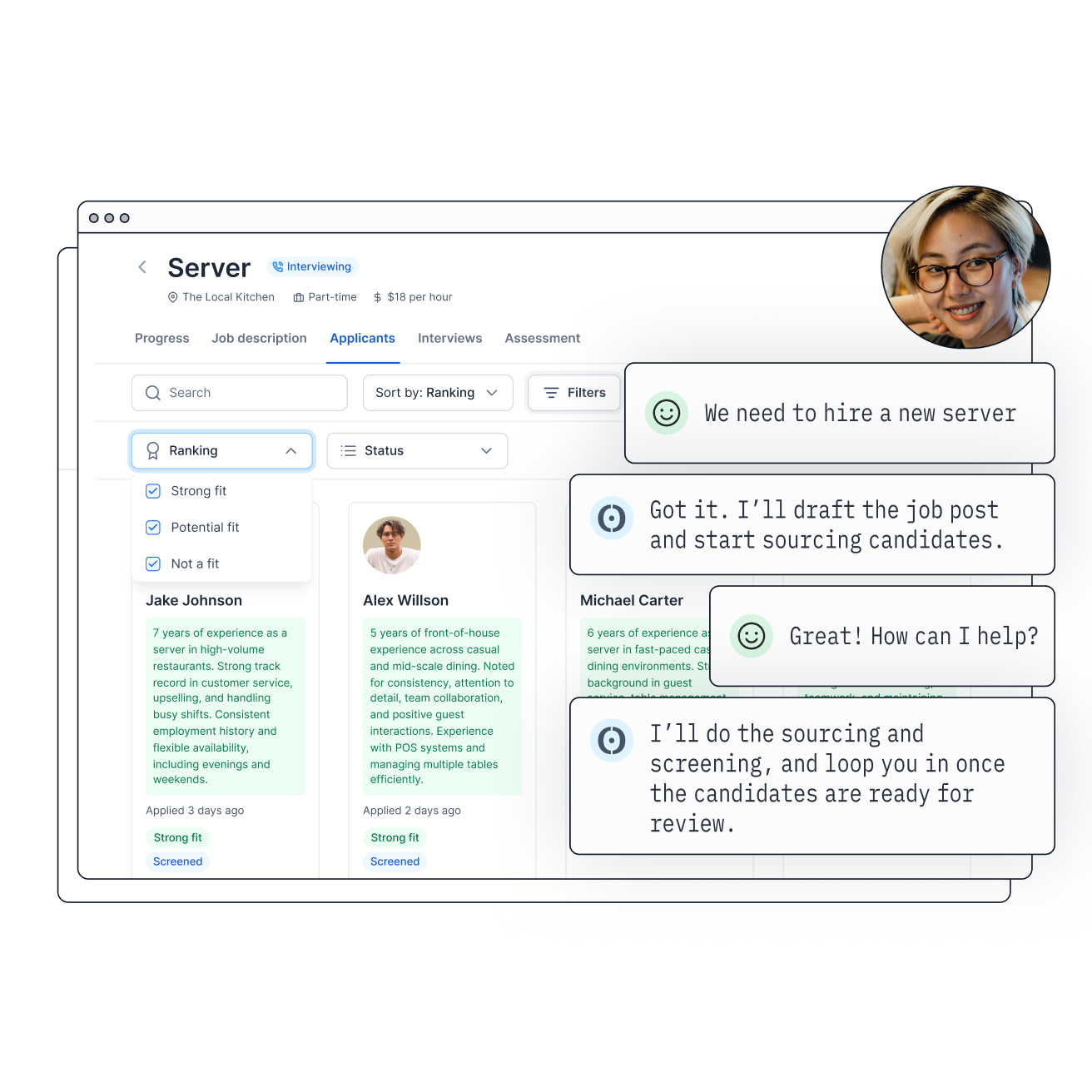
The sourcing process filters for relevance from the start. Candidates are identified based on experience level, availability, and proximity to the location, so the pool that reaches the manager has already been narrowed to people who are actually qualified for the role. AI candidate sourcing built specifically for the restaurant industry means that filtering happens automatically as candidates come in. AI candidate screening then takes over, surfacing the strongest applicants first so a manager never has to start at the bottom of a random stack. The ability to identify qualified candidates quickly without reading every application manually is what makes sourcing a genuine time saver for managers already running the floor.
How Do You Identify the Right Restaurant Staff Candidates Faster?
Finding candidates is only half the problem. The other half is identifying which ones are worth pursuing quickly enough to act before they accept another offer. In a competitive market like NYC, the window between a candidate applying and accepting a job elsewhere can be as short as 24 hours.
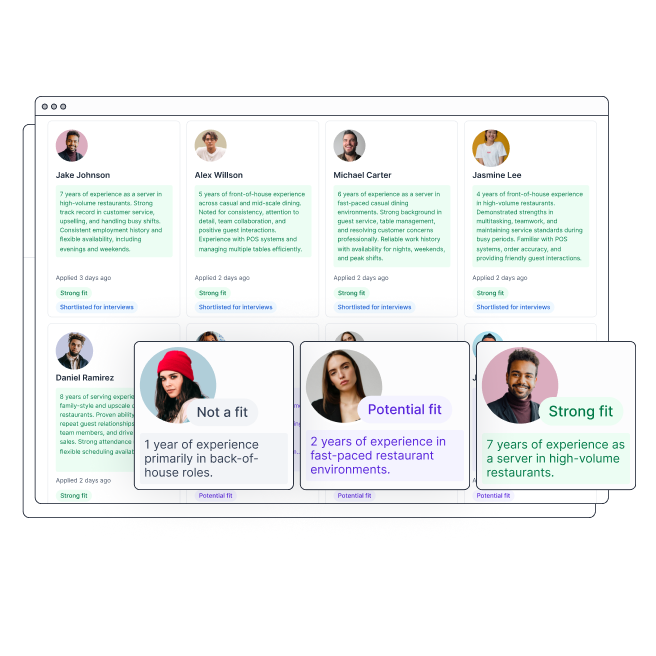
The managers who move fastest are the ones who understand how AI in recruitment handles the steps between application and interview, so they can focus entirely on who to hire rather than how to keep the process moving. OneTeam surfaces the strongest candidates first based on the criteria that matter most for restaurant roles: relevant experience, shift availability, and location.
Managers do not start their review at the top of a random stack. They start with the candidates most likely to fit the role, which compresses the time between application and interview without requiring the manager to do the sorting manually.
How Does Candidate Sourcing Fit Into the Restaurant Staffing Workflow?
Candidate sourcing does not work in isolation. It is the front end of a hiring process that also includes screening, interview scheduling, and candidate communication, all of which influence whether qualified candidates move successfully through the hiring funnel.
Automated interview scheduling removes the back and forth that loses candidates between application and first interview, which is where most sourcing effort gets wasted. Applicant tracking software for restaurants keeps every candidate organized by role, location, and stage, so nothing falls through the cracks when the manager is on the floor and not at a desk.
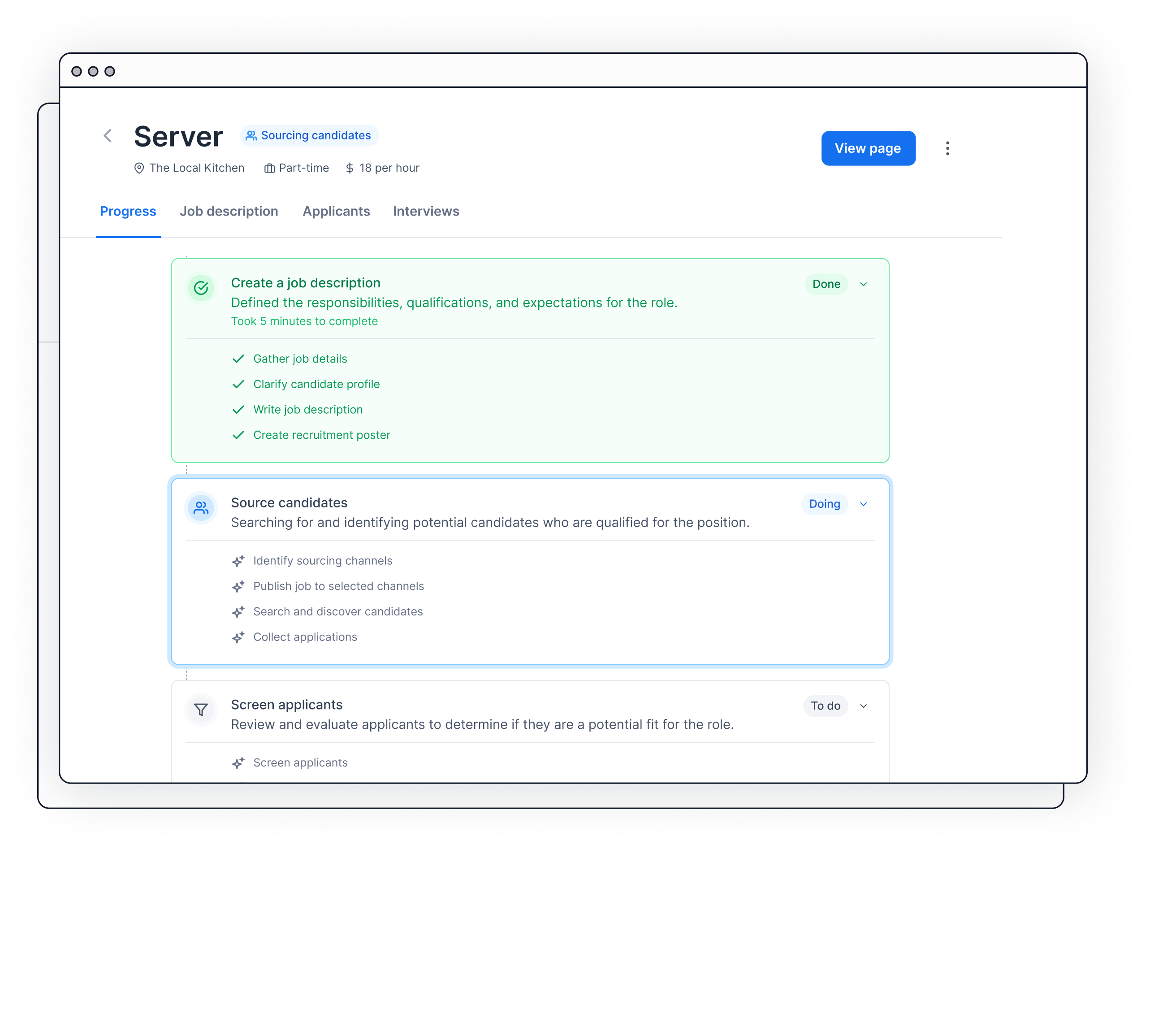
OneTeam connects sourcing to the rest of the hiring workflow so that a candidate identified through sourcing moves through screening, gets an interview scheduled, and receives communication automatically without the manager manually advancing each step.
The practical result is a hiring process where managers spend their time on the decision, not the administration. Who to interview. Who to hire. Who to develop. Everything before and after those decisions runs without requiring the manager to be available at every step.
What Does Better Restaurant Staffing Sourcing Produce Over Time?
The impact of stronger candidate sourcing is not limited to the immediate hire. Restaurants that consistently source from a broader, more relevant pool build a candidate pipeline that carries forward. Past applicants who were not hired for one opening become the first call when the next one appears. That pipeline reduces the time to fill for every subsequent opening and reduces the pressure that leads to reactive, desperation hiring.
For restaurant operators dealing with high turnover, that compounding effect is significant. Each hiring cycle that starts with a stronger candidate pool produces a better hire. A stronger candidate pool means faster staffing decisions and less pressure to hire whoever is available rather than whoever is right.
Managers who want to strengthen the full process beyond sourcing should look at how to improve your restaurant hiring process as the next step. An AI hiring assistant makes that outcome the default rather than the exception. Restaurants that rely on it are not just filling roles faster. They are building a hiring process that gets more efficient with every cycle, which is the only way to get ahead of turnover rather than constantly responding to it.
FAQ


No setup fees.
No long-term commitment.
Create your account and start hiring.
