
How to Source Candidates for Hard-to-Fill Roles
TL;DR
Hard-to-fill roles require more than job postings. They require active sourcing. Using strategies like employee referrals, social media, and direct outreach helps expand your talent pool and reach qualified candidates faster.

Helgi



Hard-to-fill roles aren’t always the most technical or senior. In restaurants, they’re the roles that hold everything together.
- A strong line cook who can handle volume.
- A reliable manager who can lead a shift without constant oversight.
- A server who knows how to move during a rush without slowing the floor down.
These roles don’t stay open because of a lack of applicants. They stay open because the right candidates are harder to reach.
Most of them are already working. They’re not actively applying, and they’re selective about where they move next. Posting a job and waiting rarely brings them in.
Understanding how to source candidates changes how you approach hiring. It gives you a way to reach the people who don’t come through the usual channels and build a more reliable path to filling roles that matter most.
Why Some Roles Stay Open Longer Than Others
When a role stays open, it’s usually not because there are no candidates. It’s because the sourcing process isn’t reaching them. Several factors make certain roles harder to fill:
- Talent shortages: Fewer qualified candidates available for specific roles
- High competition: Multiple restaurants competing for the same talent pool
- Niche requirements: Specific skills, experience, or work styles that are harder to match
- Timing issues: Strong candidates are hired quickly, often before you reach them
When these factors combine, relying on job postings alone limits your ability to attract qualified candidates.
Best Strategies to Source Candidates
Sourcing works best when it’s intentional, not reactive. Most hiring starts the same way. A role opens, a job gets posted, and then it’s a waiting game.
That approach can bring in applicants, but it rarely reaches the candidates who are harder to find or more selective about where they work. To consistently source better candidates, restaurants need a mix of strategies that go beyond job postings and actively reach the right people.

1. Use Niche Job Boards That Match the Role
Not all job boards attract the same type of candidates. General platforms bring volume, but niche boards often bring relevance.
For restaurant roles, this means focusing on platforms where hospitality workers are already looking. The goal is not to have more applicants. It’s better-aligned applicants.
2. Build an Employee Referral Program That Actually Works
Your current team members already know people in the industry. Employee referrals are one of the most effective sourcing strategies because they come with built-in trust. Candidates referred by team members are often more aligned with the role and culture.
To make this work:
- Keep the process simple
- Respond quickly to referrals
- Recognize or reward team members who refer strong candidates
A consistent referral program strengthens your talent pipeline over time.
3. Reach Passive Candidates
Some of the best candidates are not actively applying. They are already working, but are open to a better opportunity. Reaching them requires a more direct approach.
This can include:
- Reaching out through social media
- Connecting through industry networks
- Following up with past applicants
Passive candidates expand your sourcing efforts beyond active job seekers.
4. Use Social Media with Intent
Social media is often underused in hiring. Instead of just posting job openings, use it to:
- Show what it’s like to work at your restaurant
- Highlight team members and culture
- Share behind-the-scenes moments
This strengthens your employer brand and makes candidates more likely to respond when you reach out.
5. Use Systems That Keep Sourcing Organized
Sourcing becomes difficult to manage when everything is scattered. Tracking conversations, managing candidate lists, and following up manually slows the process down. This is where having a structured system matters.
OneTeam helps centralize sourcing efforts by keeping candidate information, communication, and next steps in one place. This makes it easier to move candidates through the recruitment process without losing track or creating extra work.
Top Sourcing Channels for Hard-to-Fill Roles
Not all sourcing channels deliver the same results. For hard-to-fill roles, relying on a single channel limits your reach and reduces your chances of finding qualified candidates.
Strong sourcing efforts combine multiple channels, each serving a different purpose:
- Job boards
- Employee referrals
- Social media platforms
- Past applicants and internal talent pools
- Direct outreach
Using a mix of these sourcing channels expands your talent pool and increases your chances of reaching qualified candidates for open roles. It also ensures you’re connecting with both active job seekers and potential candidates who aren’t actively applying.

How Technology Improves Sourcing
Technology doesn’t replace sourcing. It makes it more efficient. Instead of manually tracking every interaction, systems can:
- Organize your talent pool
- Surface qualified candidates faster
- Keep communication consistent
- Reduce repetitive tasks
For restaurants managing multiple sourcing channels, ai hiring software can help keep candidate information, outreach, and follow-up organized in one place.
This allows hiring managers to focus on building relationships rather than managing spreadsheets or messages. When candidate sourcing is supported by the right system, it becomes easier to scale without losing control.
Tools like candidate screening software help teams quickly identify qualified candidates once they enter the pipeline, so less time is spent reviewing applications and more time is spent moving the right people forward.
How to Improve Your Sourcing Results
Even strong sourcing strategies need the right foundation. It’s not just about where you find candidates, but how clearly you present the role, how your restaurant is perceived, and how consistently you stay connected to potential candidates.
Small gaps in these areas can limit your sourcing efforts, even if you’re using the right channels. Focusing on a few core areas can make a noticeable difference in the quality of candidates you attract and how quickly you can move roles forward.
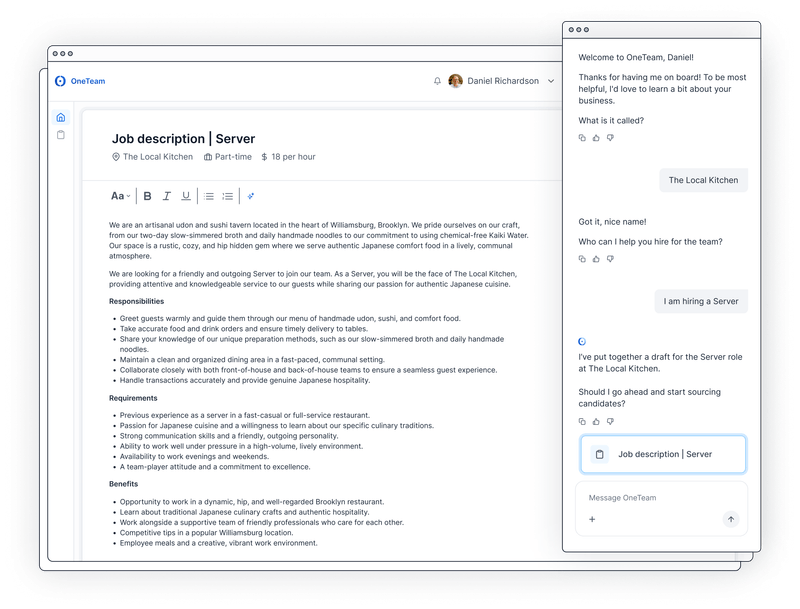
1. Write Job Descriptions That Attract the Right Candidates
A job description should clearly reflect what the role actually involves. Avoid generic descriptions. Be specific about:
- Responsibilities
- Expectations during busy shifts
- What success looks like
Clear job descriptions help attract candidates who are better aligned from the start.
2. Strengthen Your Employer Brand
Candidates evaluate you just as much as you evaluate them. Your employer brand is shaped by:
- How your team is presented
- How you communicate with candidates
- What people hear about your workplace
A strong employer brand makes sourcing easier because candidates are more open to engaging.
3. Build Relationships Before You Need Them
Sourcing works best when it’s ongoing. Instead of starting from scratch every time a role opens, build relationships with potential candidates over time. This creates a stronger talent pipeline and reduces the pressure to hire reactively.
Building a Talent Pipeline That Reduces Hiring Pressure
Sourcing becomes much easier when it doesn’t start from zero every time a role opens. A strong talent pipeline means you already have a group of potential candidates you can reach out to when new roles become available.
This reduces the need for reactive hiring and helps fill positions faster. Building a pipeline takes consistency, not complexity. It often includes:
- Keeping track of strong past candidates
- Staying in touch with referrals who were not hired immediately
- Re-engaging candidates who showed interest but were not ready to move at the time
- Maintaining relationships within your network
Over time, this creates a more reliable sourcing process. For restaurants dealing with constant turnover, this shift makes hiring more predictable and less disruptive to daily operations.
Common Mistakes That Slow Down Sourcing
Even with the right strategies, a few common mistakes can limit results.
- Relying on a single sourcing channel: Limits access to a broader talent pool
- Moving too slowly: Strong candidates don’t stay available for long
- Ignoring candidate experience: Poor communication reduces follow-through
- Lack of follow-up: Missed opportunities with potential candidates
Avoiding these mistakes helps keep sourcing efforts consistent and effective.
Sourcing Is the Only Way to Fill Hard-to-Fill Roles
Hard-to-fill roles require a different approach. They don’t get filled through job postings alone. They get filled through consistent sourcing, strong relationships, and a process that reaches beyond active applicants.
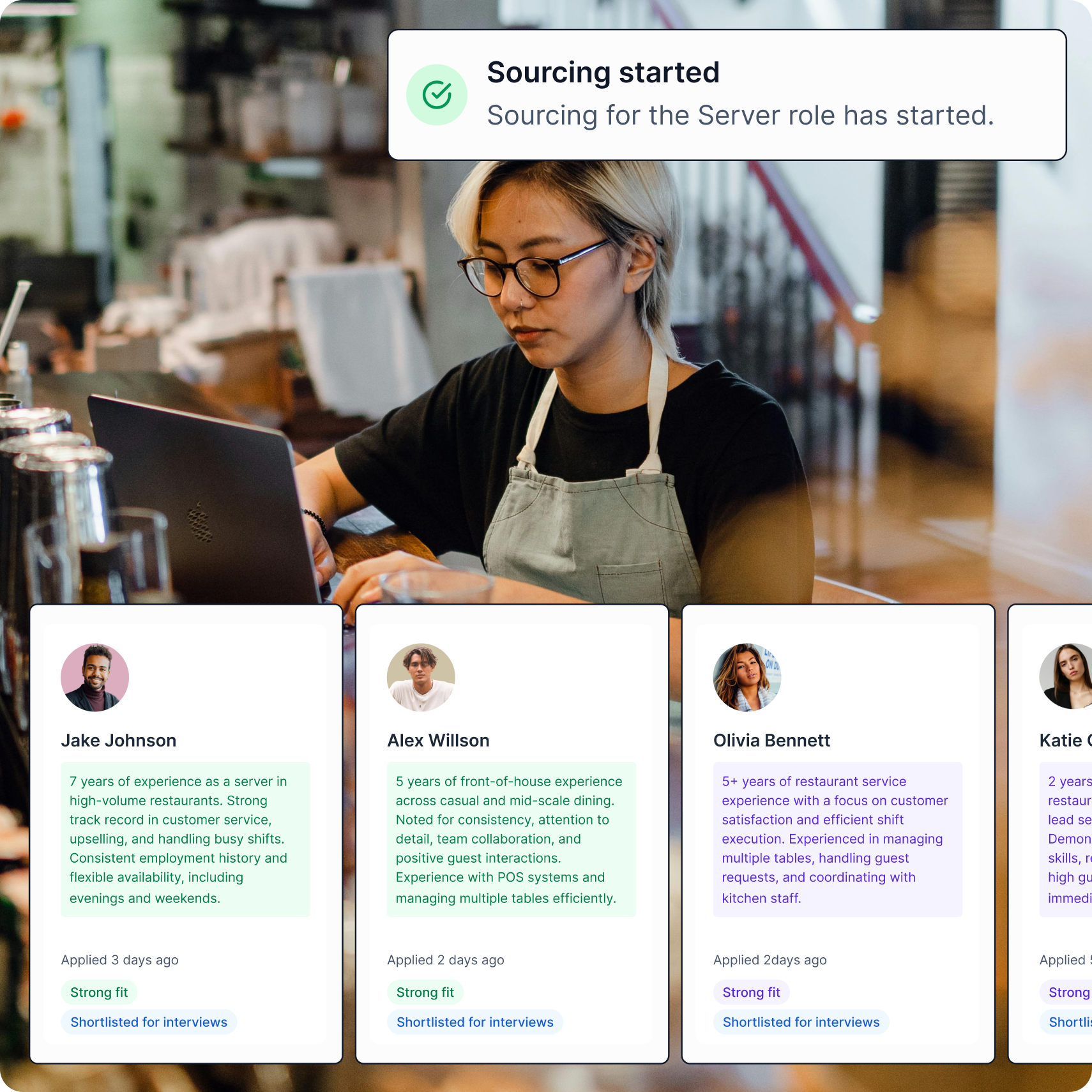
Knowing how to source candidates allows restaurant teams to stay ahead, even when competition is high and talent is limited.
When sourcing becomes structured and consistent, hiring stops feeling reactive and becomes more predictable. The right systems simply make it easier to keep that process organized as hiring needs change.
FAQ


No setup fees.
No long-term commitment.
Create your account and start hiring.
