
Best AI Recruiting Software for Hiring Success
TL;DR
AI recruiting software helps restaurants hire faster, reduce turnover, and spend less time on repetitive hiring tasks during busy shifts. By automating candidate screening, interview scheduling, and applicant organization, restaurants can improve hiring consistency, lower hiring costs, and keep managers focused on operations instead of reactive staffing.

Lyuba



Most hiring mistakes in restaurants don’t come from bad judgment. They come from a lack of time. When a position opens, managers move fast, review whoever applied first, and make a call just to keep the floor staffed. A week later, they’re hiring again.
That cycle is expensive. It leads to:
- Higher turnover
- Increased cost per hire
- Less time spent on actual operations
AI recruiting software helps break that cycle. It speeds up the early steps of hiring, improves how candidates are matched, and keeps applicants engaged before they drop off.
This guide explains how AI recruiting software fits into real restaurant operations, what makes a tool actually useful, and how hiring teams can build a more reliable process without slowing down service.
What Is AI Recruiting Software and Why It Matters for Restaurants
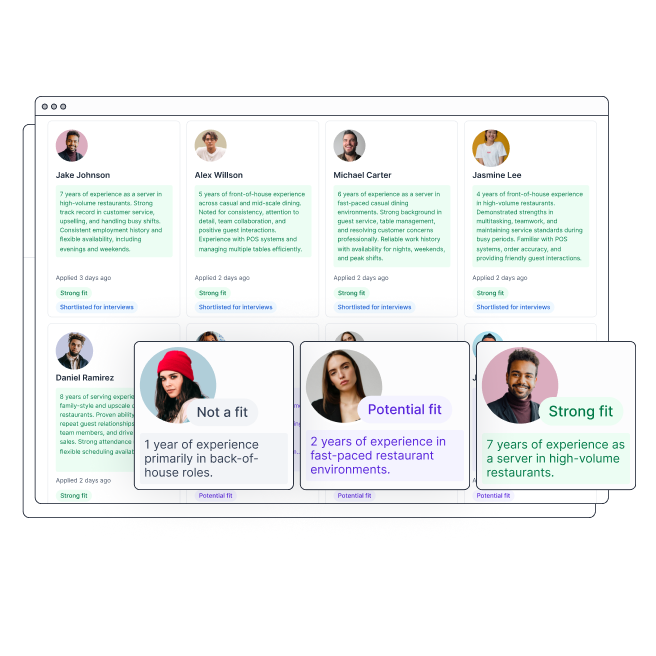
AI recruiting software helps hiring teams handle the most time-consuming parts of hiring. It keeps candidates organized, highlights strong applicants, and moves the process forward without constant manual work.
This is especially useful with candidate sourcing, where the goal is not just more applicants, but better ones from the start.
In restaurants, the impact is immediate. Hiring never stops, turnover is constant, and managers don’t have time to sit in the office reviewing resumes while the floor needs attention.
The right tools help by:
- Sorting and prioritizing applicants automatically
- Highlighting the most relevant candidates
- Handling early screening without back-and-forth texting
- Keeping candidates engaged so they don’t drop off
Without this support, managers fall into reactive hiring. They rush decisions to fill shifts, which leads to more turnover and higher hiring costs over time.

Top Ways AI Recruiting Software Improves Hiring Outcomes
1. Faster Time to Hire
Open roles create immediate pressure. Every unfilled shift affects service and team morale. AI recruiting tools reduce delays by moving candidates through early steps quickly.
Applications get reviewed faster. Strong candidates surface early. Managers spend less time digging through applications and more time making decisions. A shorter time to hire keeps operations stable.
2. Stronger Candidate Matching
Restaurants receive plenty of applications. The challenge is identifying who can actually perform on the floor. AI recruiting software improves candidate matching by:
- Ranking applicants based on relevant experience
- Filtering out unqualified job seekers
- Presenting clear candidate summaries
This allows managers to focus on quality, not volume.
3. Consistent Candidate Screening
Screening often becomes repetitive and inconsistent. Questions vary depending on time and pressure. AI-powered screening creates structure by:
- Asking the same key questions for every applicant
- Capturing availability and role fit early
- Filtering candidates before interviews
This keeps standards consistent across locations and roles.
4. Better Candidate Experience
Candidates move on quickly when communication slows down. Delays lead to no-shows and drop-offs. AI recruiting platforms improve candidate experience through:
- Fast responses after application
- Clear next steps
- Simple interview scheduling
A smoother experience keeps candidates engaged and increases show-up rates.

Key Features to Look for in Restaurant Hiring
Not all recruiting software fits restaurant operations. Many systems are built for enterprise-grade hiring teams with long timelines. Restaurant operators need tools that support speed and simplicity.
A Smooth Candidate Application Flow
Long applications reduce completion rates. Job seekers expect a quick process. Look for:
- Mobile-friendly applications
- Minimal steps to apply
- Fast confirmation after submission
Strong candidate sourcing software helps ensure job postings reach the right job seekers without requiring managers to manage multiple platforms manually.
Built-In Candidate Screening
Screening should not add more work. The candidate screening system should surface the right applicants early. Important features include:
- Pre-set screening questions
- Automatic filtering
- Easy-to-read candidate summaries
Interview Scheduling That Runs Itself
Scheduling often creates delays and confusion. Messages go back and forth while candidates lose interest. An effective interview scheduling systems allow:
- Candidates to choose available time slots
- Automatic confirmations
- Organized interview tracking
Centralized Candidate Data
Scattered notes and messages slow everything down. A single view of all applicants improves decision-making. Managers should be able to:
- Track every applicant in one place
- Compare candidates quickly
- Move candidates through stages without confusion
Simple, Practical Interface
If a system feels complicated, it won’t get used during a busy shift.
The best AI recruiting tools are easy to navigate. Managers can check candidates, review updates, and make decisions in minutes.
Business Impact of AI Recruiting Software
AI recruiting software improves hiring outcomes in ways that show up directly on the floor, in labor costs, and in manager workload.
- Lower Cost Per Hire: Faster hiring reduces overtime, limits revenue loss from understaffing, and cuts down on repeat hiring cycles.
- Reduced Manager Workload: Hiring tasks often fall on already busy managers. Automation removes repetitive steps and frees up time for operations.
- More Reliable Hiring Decisions: Structured screening and better candidate data lead to more consistent hiring outcomes.
- Stronger Talent Pipeline: With automated candidate sourcing, restaurants can maintain a steady flow of applicants even during busy weeks, reducing the pressure to hire reactively.
How to Choose the Right AI Recruiting Software for Your Restaurant
Most AI recruiting platforms promise the same outcomes. Faster hiring, better candidates, less manual work. The difference comes down to how well the system fits daily restaurant operations.
Restaurant managers do not need complex systems. They need tools that work during a shift, not just in an office. When evaluating AI recruiting software, focus on these practical factors:
1. Speed of Setup
If a system takes weeks to configure, it won’t solve immediate hiring gaps. Restaurants need tools that can start working within days.
2. Ease of Use During a Shift
Managers are not sitting at a desk all day. They check hiring between tasks. Look for systems that:
- Show candidate summaries quickly
- Require minimal clicks to move candidates forward
- Works well on mobile devices
3. Role-Specific Screening
Hiring a line cook is different from hiring a server. The system should allow different screening questions based on the role. This improves candidate matching and reduces wasted interviews.
4. Support for High Turnover
Restaurants hire continuously. The system should handle ongoing hiring, not just one-time roles. This includes:
- Keeping past candidate data organized
- Making it easy to reopen roles
- Maintaining a steady flow of applicants
Integration With Daily Operations
The tool should fit into how managers already work. If it adds extra steps, it will slow things down. The goal is simple. Hiring should run alongside operations, not compete with them.
Restaurants that are constantly filling roles often choose tools like OneTeam because they fit how hiring works during service, not just how it’s designed in theory.

Common Mistakes Restaurants Make With Hiring Software
Even with the right tools, hiring can still break down if the process is not clear. These are the most common mistakes that slow down results in restaurant operations:
- Overcomplicating the Process: Too many steps create delays and increase candidate drop-off. Simple processes work better in fast-paced environments.
- Delayed Follow-Up: Slow responses cost you, candidates. Even with the right tools, speed still matters.
- Treating All Roles the Same: Different roles require different screening and evaluation. A one-size-fits-all approach lowers hiring quality and increases turnover.
- Ignoring Candidate Experience: A slow or confusing process hurts your reputation. Clear communication and fast scheduling improve show-up rates.
Hiring That Keeps Up With the Floor
Hiring in restaurants doesn’t slow down. The pressure is constant, and when your process can’t keep up, the impact is immediate. Gaps in the schedule, stressed teams, and managers pulled away from service to fix it.
Strong hiring systems don’t add more work. They remove the slow parts that cause delays in the first place. They help:
- Move candidates forward without bottlenecks
- Cut down the time between steps
- Keep decisions clear and quick
When hiring runs smoothly, managers stay focused on the floor instead of chasing applications or coordinating interviews. For restaurants juggling multiple roles and daily demands, the goal is simple. Build a process that keeps pace. When hiring stays steady, the operation stays stable.
FAQ


No setup fees.
No long-term commitment.
Create your account and start hiring.
