
Which Platforms are Most Reliable for Restaurant Recruitment?
TL;DR
No single recruitment platform consistently solves restaurant hiring. The most successful operators combine multiple recruiting channels with structured screening, candidate sourcing, and faster follow-up to attract stronger candidates and reduce time-to-hire.

Lyuba



Recruitment platforms are often evaluated by the number of applications they generate. For restaurants, that is rarely the metric that matters most. A large volume of applicants means little if managers spend hours sorting through resumes, scheduling interviews, and losing qualified candidates to faster competitors.
The most effective restaurants judge recruitment platforms differently. They look for systems that improve candidate quality, reduce manual work, and keep hiring moving from the first application to the final offer. Understanding those differences makes it easier to choose a platform that strengthens the entire hiring process rather than simply increasing application volume.
Why Do Most Restaurants Struggle to Recruit Consistently?
Restaurant staff turnover forces many restaurants into reactive hiring. A server resigns, a line cook stops showing up, or a manager leaves unexpectedly, and the hiring process begins only after schedules are already under pressure. Last-minute restaurant staffing gaps rarely get filled with the right person when urgency is the only thing driving the decision.
That urgency affects every decision that follows. Job descriptions are reused without updates, resumes pile up between shifts, interviews take days to schedule, and qualified candidates often accept another offer before the restaurant responds. The challenge is rarely attracting applicants. It is managing the hiring process quickly enough to identify the right people before they disappear from the market.

What Makes a Recruitment Platform Reliable?
The best recruitment platforms do more than generate applications. They help restaurants hire qualified employees with less manual work. When evaluating the best restaurant recruitment platforms, look beyond the number of applicants. A reliable platform should help your hiring team:
- Reach qualified candidates instead of simply increasing application volume.
- Reduce the time spent reviewing unqualified resumes.
- Keep candidates engaged throughout the hiring process.
- Support high-volume hiring without creating additional administrative work.
- Improve communication between managers and applicants.
The strongest platforms support the entire hiring journey rather than only the first step.
What Are the Most Reliable Recruitment Channels for Restaurants?
Different recruiting channels solve different hiring problems. Rather than relying on one source, successful restaurants combine several approaches.
Restaurant-specific job boards remain valuable for experienced front-of-house and back-of-house employees. General job boards increase visibility but usually require more resume screening. Employee referrals often produce strong long-term hires, while social media works well for local recruiting. The most consistent hiring results come from combining these channels rather than relying on one platform alone.
Why Are Job Boards No Longer Enough for Restaurant Hiring?
Posting a vacancy and waiting for applications worked when restaurants had more applicants than open positions. The restaurant staffing shortage has changed the equation. Qualified candidates often have multiple opportunities available at the same time, and the restaurants that move fastest are the ones that get the hire.
Job boards remain an important part of recruitment, but they are only one source of talent. Restaurants that consistently hire well actively reach candidates instead of waiting for them to apply. That broader strategy helps operators reduce the time spent reviewing poor-fit applications while improving the overall quality of the candidate pool. The strongest restaurants are not necessarily posting more jobs. They are building hiring systems that continue working long after the initial posting goes live.
Is the Recruitment Platform Really the Problem?
Restaurants often look for a better recruitment platform when hiring becomes difficult. While the right platform expands access to candidates, it cannot compensate for a hiring process that moves too slowly or lacks structure. Delayed responses, inconsistent screening, and interview scheduling bottlenecks will continue to cost qualified candidates regardless of where they applied.

The restaurants that recruit most successfully pair the right recruitment channels with a disciplined hiring process. Clear job descriptions, consistent screening criteria, timely communication, and structured interviews help convert applicants into employees. When those fundamentals are in place, every recruitment platform becomes more effective because qualified candidates move through the process without unnecessary delays.
Candidate Sourcing Is Becoming the Biggest Differentiator
The biggest limitation of traditional recruitment platforms is that they depend on candidates finding your job posting first. If qualified candidates never see the role or are not actively looking, they never enter your hiring process.
Candidate sourcing changes that dynamic. Instead of relying only on inbound applications, restaurants proactively identify and engage candidates who match the role based on experience, location, and availability. Proactive hiring with AI candidate sourcing moves recruiting from a reactive scramble into an ongoing process that runs before the next vacancy opens. Managers who want a practical framework for how to source candidates beyond job boards will find that outreach consistently produces a stronger pool than waiting for the right person to apply.
Why Is AI Changing How Restaurants Recruit?
Restaurant managers rarely have hours to spend reviewing every application manually. During a busy week, hiring competes with scheduling, inventory, guest service, and everything happening on the floor. This is where AI can remove some of the administrative work without replacing managerial judgment.
Modern recruiting platforms can help:
- Prioritize qualified applicants through Automated candidate screening
- Assist with resume screening during periods of high-volume hiring
- Organize candidate profiles in one place
- Keep candidates engaged through automated follow-up
- Support structured interview planning with consistent interview question templates
Instead of replacing hiring managers, these tools allow them to spend more time evaluating people and less time managing paperwork.
How Should Restaurants Evaluate a Recruitment Platform Without an HR Team?
Most platform reviews are written for restaurant groups with dedicated HR departments and time to configure complex systems. For a restaurant with 15 to 50 employees, that context does not apply. The manager doing the hiring is the same person running the floor, scheduling shifts, and handling the Saturday rush.
Three questions worth asking before committing to any platform:
- How long does setup take? If a system requires weeks to configure, most managers walk away before it produces a single hire.
- Is it usable between shifts? A platform that needs training before it works adds friction instead of removing it.
- Does it cut down review time? The goal is fewer resumes to read, not a better place to organize them.
For smaller operators, the right platform is not the most feature-rich one. It is the one that surfaces qualified candidates without hours of manual work, keeps interviews moving without coordination overhead, and stays out of the way while the real work of running a restaurant continues.

How Does OneTeam Help Restaurants Recruit More Effectively?
Many hiring platforms were designed for corporate recruiting teams with dedicated HR departments. Restaurant hiring works differently. Managers need to fill positions quickly while continuing to run the operation.
OneTeam was built specifically for restaurants. Rather than adding another complicated system to learn, it combines candidate sourcing software, ai candidate screening, interview coordination, and applicant tracking into a workflow designed for restaurant operators. Managers can identify qualified candidates faster, organize all applicants in one place, and reduce the administrative work that slows hiring.
Recruitment Is an Operational Function, Not Just an HR Function
Every day a position stays open affects more than the hiring team. Managers spend more time covering shifts, experienced employees take on additional responsibilities, and service quality becomes harder to maintain. Recruitment decisions have operational consequences long before a new employee starts their first shift.
The restaurants that consistently build strong teams recognize hiring as part of daily operations rather than an occasional administrative task. They invest in processes that reduce delays, improve candidate quality, and keep hiring moving even during the busiest weeks. That mindset turns recruitment from a reactive task into an operational advantage.
How Do You Choose the Right Restaurant Recruitment Platform?
The best recruitment platform depends on how your restaurant hires, not simply how many applications you receive. If your restaurant regularly hires for multiple locations or experiences frequent turnover, look for a platform that offers:
Restaurants should also evaluate how well a platform fits into daily operations. AI hiring software built for restaurants reduces that manual load rather than adding a new system to maintain. Many operators exploring the best restaurant recruitment platforms find that the most valuable solution is not the one with the largest job board. It is the one that reduces manual work, improves hiring quality, and keeps the recruitment process moving from the first application through the final offer.
What Strategies Help Restaurants Attract Better Candidates?
The platform you choose matters, but the hiring process surrounding it matters even more. Restaurants that go beyond standard job boards and explore hiring ideas for restaurants built specifically for high-turnover environments consistently attract stronger candidates than those relying on a single channel.
- Write clear job descriptions with pay, schedule, and location included.
- Respond to new applications within 24 hours whenever possible.
- Use the same screening criteria for every applicant.
- Keep interview scheduling simple and move qualified candidates forward quickly.
- Maintain relationships with past applicants rather than starting every hiring search from scratch.
Small improvements at each stage compound into faster hiring and stronger long-term results.
What Are the Most Common Recruitment Mistakes That Slow Restaurant Hiring Down?
Many hiring delays are self-inflicted. The most common restaurant hiring mistakes are not caused by a shortage of candidates but by unnecessary friction that operators introduce into their own process. Some of the most common mistakes include:
- Relying on a single job board.
- Waiting several days before reviewing applications.
- Manually sorting every resume without screening criteria.
- Losing track of applicants across emails, texts, and spreadsheets.
- Taking too long to make a hiring decision after interviews.
Each delay increases the likelihood that qualified candidates will accept another opportunity before an offer is made.
Build a Recruitment Process, Not Just a Job Posting
The restaurants that recruit consistently well do not depend on one hiring platform. They build a repeatable process that attracts qualified candidates, keeps them engaged, and moves them efficiently from application to offer.
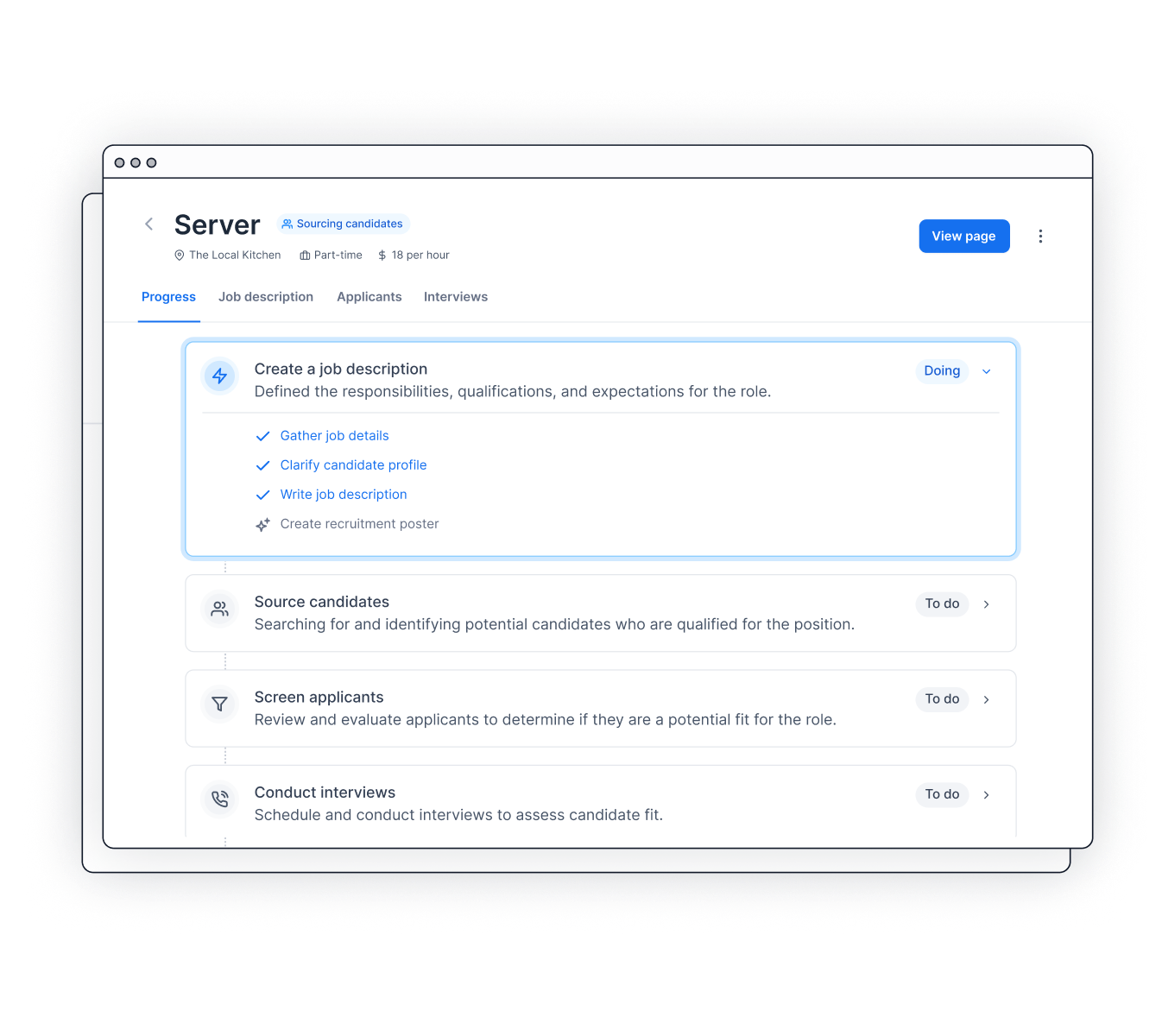
That process starts with choosing the right recruitment channels, but it also requires proactive sourcing, organized applicant tracking, and consistent communication throughout the hiring journey. Many restaurants bring those functions together with an AI hiring assistant for restaurants, making it easier to attract stronger candidates while reducing the administrative work that slows hiring down.
FAQ


No setup fees.
No long-term commitment.
Create your account and start hiring.
