
Avoid These Restaurant Hiring Mistakes That Cost You Staff
TL;DR
Restaurant hiring mistakes are rarely random. They follow predictable patterns that cost operators time, money, and staff. They include generic job descriptions, hiring first available candidate, unstructed interviews and treating every hire like an emergency.

Helgi



Restaurant turnover is often viewed as an inevitable cost of doing business. Yet many staffing challenges begin long before an employee decides to leave. They start in the hiring process, where rushed decisions, inconsistent screening, and reactive recruiting practices shape the quality of every hire that follows.
The difficulty is that these decisions rarely appear significant on their own. A delayed interview, a vague job posting, or a candidate hired out of urgency rather than fit can seem harmless at the moment. Over time, however, they compound, creating a cycle of turnover, understaffing, and repeated hiring. Recognizing the most common restaurant hiring mistakes is the first step toward building a more stable workforce.
Why Restaurant Hiring Goes Wrong So Often
The restaurant staffing shortage has made that urgency worse. High turnover creates pressure, and pressure creates shortcuts that compound over time. When a position needs to be filled before the next service rush, the hiring process compresses into whatever fits between shifts. Screening gets skipped. Job descriptions get recycled. The first available candidate becomes the next hire regardless of fit.
The reality of restaurant staffing in a high-turnover environment is that shortcuts compound. A rushed hire produces a poor fit. A poor fit leaves or gets let go. The position opens again. The manager scrambles again. Breaking that cycle requires slowing down the front end of the process, even when the pressure to move fast is real.
Mistake 1: Writing Generic Job Descriptions
A vague job description attracts everyone and filters out no one. Postings that say "must be a team player" attract a flood of unqualified applications and leave candidates surprised by the actual job on day one.
Strong job descriptions state the schedule, physical demands, required experience, and pay range upfront. Restaurants managing multiple open positions often use AI hiring software to create role-specific postings more quickly without having to start from scratch each time.
Mistake 2: Hiring the First Available Candidate
When a position has been open for two weeks, and service is getting harder to cover, the first decent candidate can start to look like the right hire. That instinct is expensive. A bad hire costs the team covering their gaps, the manager handling performance issues, and the guests experiencing the decline. Comparing at least two or three candidates before deciding consistently produces better outcomes, even when it takes a few extra days.
Mistake 3: Skipping Candidate Screening
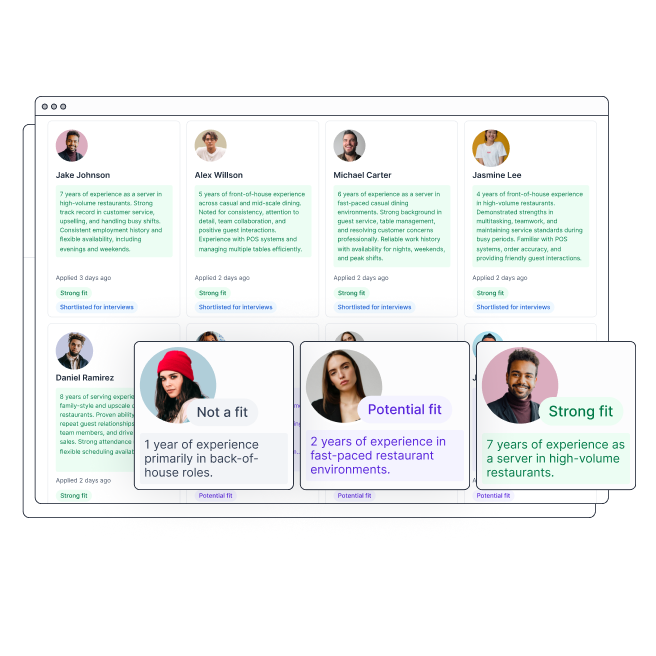
Effective screening catches the obvious mismatches before they reach the interview stage. Availability that does not match the schedule, a commute that makes reliability unlikely, no relevant experience for a role that requires it. Catching those issues early keeps the process focused on candidates who can actually do the job. Addressing common restaurant hiring mistakes at the screening stage alone removes a significant share of the friction that slows hiring down.
OneTeam screens and ranks applicants based on experience, availability, and proximity to the workplace, so the candidates that reach the interview stage are already a closer fit for the role.
Mistake 4: Taking Too Long to Schedule Interviews
Hourly candidates are almost always applying to multiple places at once. The operator who responds first and schedules fastest gets the hire. A manager who takes three days to respond and another two to confirm loses qualified candidates to faster competitors. Automated interview scheduling removes the back and forth, sends reminders automatically, and meaningfully reduces the no-show rate.
Mistake 5: Running an Unstructured Interview
Asking different questions to every candidate and evaluating based on gut feeling produces inconsistent results. Structured interviews ask the same core questions every time and evaluate responses against the same criteria. The hiring mistakes restaurants make at the interview stage are almost always traceable back to inconsistency in how candidates were evaluated.
Mistake 6: Ignoring Candidate Experience
No-shows are not always the candidate's fault. A candidate who applied four days ago, got one automated confirmation, and has heard nothing since has already mentally moved on. A confirmation when the application is received, a clear interview time, and a reminder the day before are not complicated steps. They are the difference between a candidate who shows up and one who does not.
Mistake 7: Treating Every Hiring Need as an Emergency
Reactive hiring never builds the foundation that makes the process faster and more predictable. Managers ready to break that cycle should start with how to improve your restaurant hiring process before the next vacancy opens. Keeping past applicants organized, maintaining reusable job descriptions, and tracking which channels produce the best candidates shortens the time between a position opening and a qualified hire starting. Operators relying on last-minute restaurant staffing as the default will keep repeating the same cycle.
How Technology Helps Restaurants Avoid These Mistakes
The right hiring technology for a restaurant does one thing well: it reduces the work managers have to do manually without adding a new system to learn and maintain. That means candidate sourcing, screening, interview scheduling, and applicant tracking in one place, built for the pace and volume of restaurant staffing specifically.
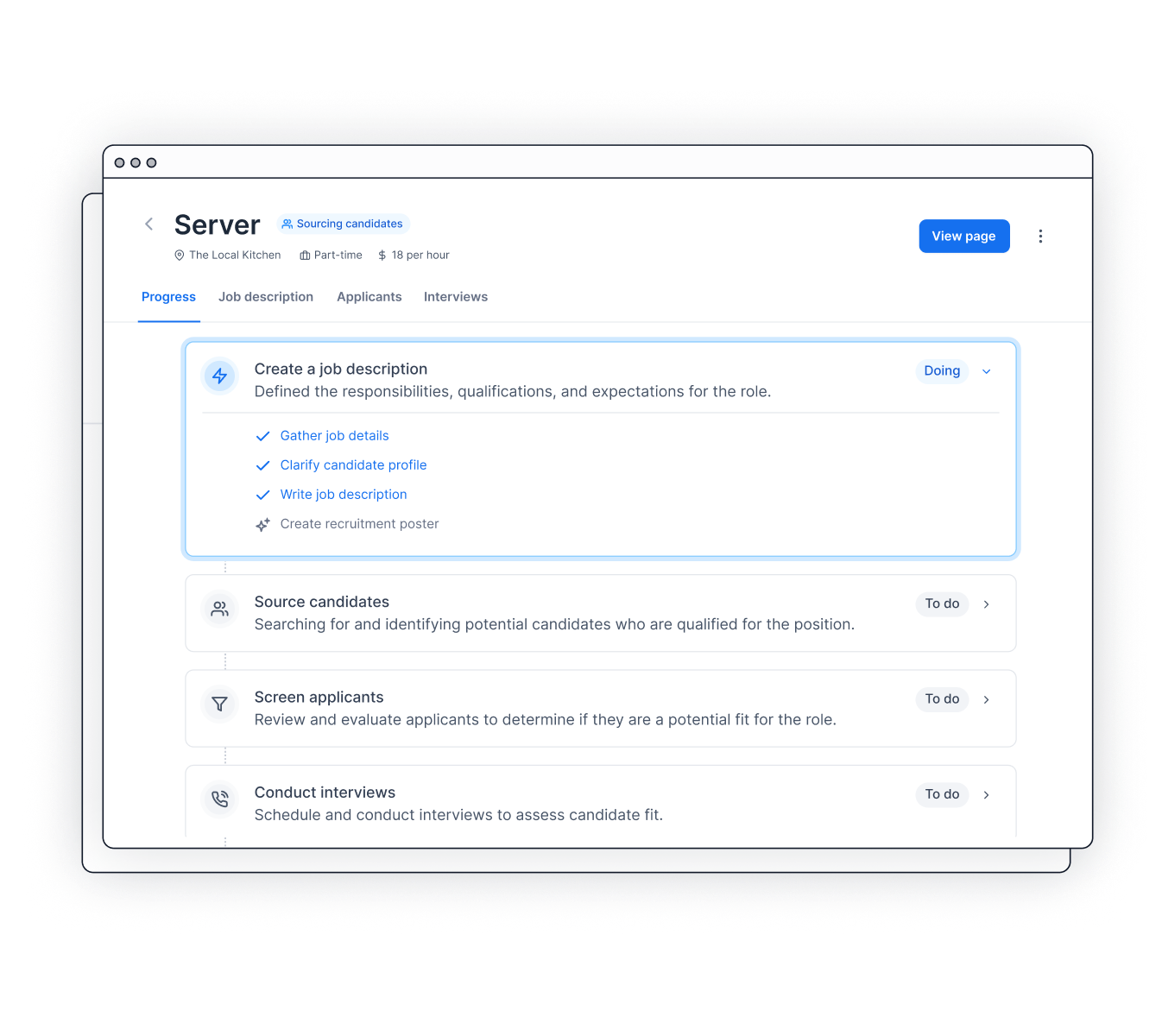
OneTeam is built for the way restaurants actually hire. Managers get automated screening that surfaces qualified applicants first and interview scheduling that runs without manual follow-up.
FAQ


No setup fees.
No long-term commitment.
Create your account and start hiring.
