
Use an AI Job Description Generator for Faster Hiring
TL;DR
Most hiring issues start with unclear job descriptions that attract the wrong candidates and slow everything down. Use our job description generator to reflect your actual operation, you’ll attract better-fit applicants, reduce wasted interviews, and spend less time dealing with hiring problems during already busy days.

Helgi



The biggest threat to hiring quality isn’t poor interviewing; it’s a vague job description.
In restaurants, roles often get reused without much thought. A manager needs someone on the floor, opens an old post, tweaks a few lines, and hits publish. It feels productive in the moment. But a few days later, the gap shows up in the candidates.
- Misaligned experience.
- Wrong expectations.
- People who don’t fully understand the pace of service or what the role actually demands.
That mismatch creates a chain reaction. More time spent screening. More interviews that go nowhere. More early turnover sends you right back to where you started.
A clear job description for restaurant staff doesn’t just explain the role. It’s what separates generic posts from quality job descriptions that actually bring in the right people.
An AI job description for restaurant staff brings structure to a part of hiring that usually gets rushed, so you can move quickly without losing momentum. This is what makes faster hiring possible without lowering your standards.
What an AI Job Description Generator Actually Solves
Most managers already know what they need. The problem is finding the time to write it clearly. An AI job description generator removes that bottleneck. Instead of starting from scratch, you generate a structured draft and build from there.
In a restaurant, hiring usually happens under pressure:
- Someone quits unexpectedly
- A team member doesn’t show up
- Business picks up faster than expected
Writing becomes reactive, and quality drops.
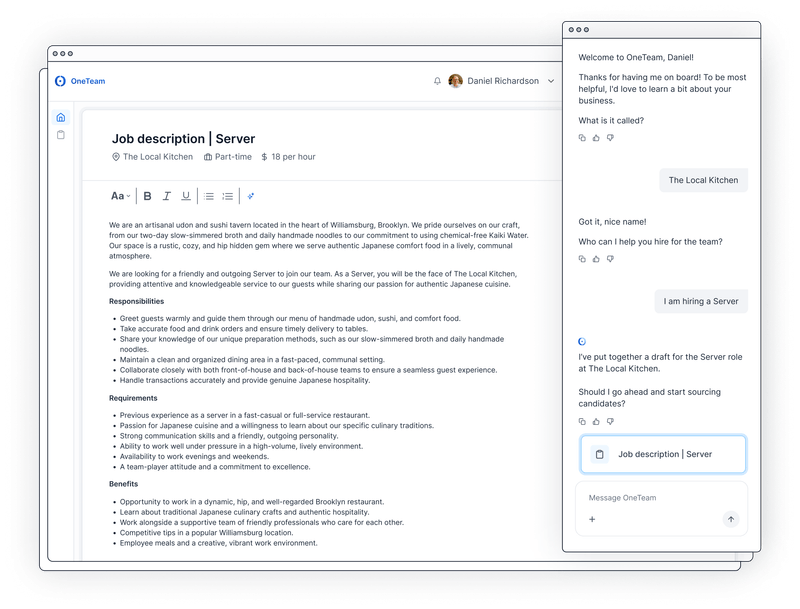
That’s why many operators use tools like an AI hiring assistant or an AI job description generator to get moving quickly. You start with a structured draft, make a few edits, and move on. Tools like OneTeam follow that same idea, helping you get something usable in place without slowing everything else down.
What Is an AI Job Description Generator?
An AI job description generator is a tool that creates structured job descriptions based on role requirements, responsibilities, and expectations. It helps hiring managers produce clear, consistent job posts quickly without starting from scratch.
That’s why many teams use tools like this to standardize how roles are written. Rather than relying on old posts or rewriting from memory, they start with a consistent format and adjust it to match the reality of the floor.
Benefits of Using an AI Job Description Generator
Using an AI job description generator doesn’t just save time. It improves how hiring works across the entire process.
- Faster job posting
- Better alignment with candidates
- Fewer irrelevant applications
- Less back-and-forth during hiring
When the job description is clear from the start, everything that follows becomes easier to manage.
Why Restaurants Are Using AI for Job Descriptions
When managers adopt something new, it’s usually for one reason. It saves time without making the job harder. An AI job description generator helps remove one of the most common delays in hiring: getting the role written and posted.
Two things change immediately:
- It shortens the gap between recognizing a hiring need and posting the role
- Managers spend less time fixing unclear job posts later in the hiring process
When restaurants start using an AI job description generator, the shift is not just speed. It’s consistency. Roles get written the same way each time, which makes hiring easier to manage across shifts and across locations.
Over time, that clarity compounds. Fewer no-shows. Fewer interviews that stall. Fewer hires leave within weeks because the job wasn’t what they expected.
How AI Job Descriptions Reduce Time to Hire
In restaurant hiring, delays don’t usually come from one big problem. They come from small gaps between steps. Writing the job description is one of the first delays. It gets pushed, reused, or rushed.
Using an AI job description generator tightens the timeline from the very start. The gap between each step gets smaller, which is what actually reduces time to hire.
- Roles get posted faster
- Candidates apply sooner
- Conversations start earlier
- Interviews happen closer to the application
That compression matters. In a fast-moving hiring market, even a one-day delay can mean losing a strong candidate. When the job post is clear from the start, fewer candidates drop off later in the process.

How to Use an AI Job Description Generator
Using a job description generator should feel straightforward. You’re not adding work, you’re just organizing what you already know into something clear and usable. Here’s how to approach it:
1. Define the role clearly
Start with the role as it actually exists in your restaurant.
A line cook handling a busy dinner service operates very differently from someone doing morning prep. A server covering weekend deals has a different pace than weekday lunch staff. That context matters, and it should be clear from the beginning.
2. Add real responsibilities
This is where the job description becomes useful.
Instead of relying on generic phrases, describe what the job actually looks like during a busy service. Think about how the team works together, how fast things move, and what the role is responsible for when the pressure is on.
3. Set expectations early
Be clear about what you need before someone applies. Include:
- Experience level
- Availability
- Ability to handle a fast-paced environment
This helps filter out candidates who aren’t a fit and saves you time later.
4. Match your restaurant’s tone
Every restaurant communicates differently, and your job post should reflect that. A casual spot should sound approachable and direct. A more polished concept may need a more refined tone. This affects who feels comfortable applying.
5. Review and finalize
Once the draft is generated, take a minute to make it yours. Add key details like pay, hours, and location. Remove anything that feels generic. Tighten anything unclear. Then post it and move on.
Make the Output Work for Your Restaurant
An AI job description for restaurant staff works best when it reflects your actual operation.
The biggest difference comes from the details you include. Candidates are paying attention to things like pay range, hours, and how tips are handled. When that information is clear, you avoid a lot of unnecessary back-and-forth.
It also helps to describe how your team operates during busy periods. Whether your kitchen runs tight during a packed dinner rush or your front-of-house team handles constant table turnover, these details give candidates a better understanding of the role.
When you’re using an AI job description generator, what you put in shapes what you get out. The more specific you are, the more effective the result.

When an AI Job Description Generator Isn’t Enough
An AI job description generator helps you move faster, but it’s not a shortcut for thinking through the role. If the role itself isn’t clear, the output won’t fix that. You still need to understand what success looks like on your floor.
This usually shows up in situations like:
- New roles that don’t exist yet in your restaurant
- Positions with shifting responsibilities across shifts
- Teams where expectations haven’t been clearly defined
In those cases, writing a job description manually first can actually help clarify what you’re hiring for. Once that’s clear, using a generator becomes much more effective.
The tool works best when the role is already understood. It helps you move faster, not figure things out for you.
Common Mistakes to Avoid
Most issues don’t come from the tool itself. They show up in how the job description gets handled once it’s generated.
Copying and pasting without reviewing is one of the fastest ways to weaken the post. The description ends up sounding generic, disconnected from how the restaurant actually runs. Candidates pick up on that quickly, and the ones you want are less likely to engage.
Vagueness creates a different kind of problem. When expectations aren’t clearly defined, you attract candidates who aren’t prepared for the pace or structure of the role. That usually shows up later in the process through wasted interviews, confusion during trials, or early turnover.
Using the same structure for every role is another common mistake. A server, host, and line cook experience service differently. When those differences aren’t reflected in the description, the role becomes harder to understand, and hiring becomes less consistent.
Example Job Description
Job Title: Server (Restaurant Staff)
Location: New York, NY
Schedule: Evenings and weekends
You’ll manage a section during busy service, keep tables moving efficiently, and work closely with the kitchen to ensure orders are accurate and timely. This role requires strong awareness on the floor and the ability to stay organized when the pace picks up.
We’re looking for someone with at least one year of restaurant experience, consistent weekend availability, and the ability to handle high-volume service without losing attention to detail.
We offer competitive hourly pay plus tips, steady scheduling, and opportunities to grow within the team.

Where OneTeam Actually Saves You Time
Most hiring tools promise efficiency but end up adding extra steps. That’s usually why managers stop using them after the first try.
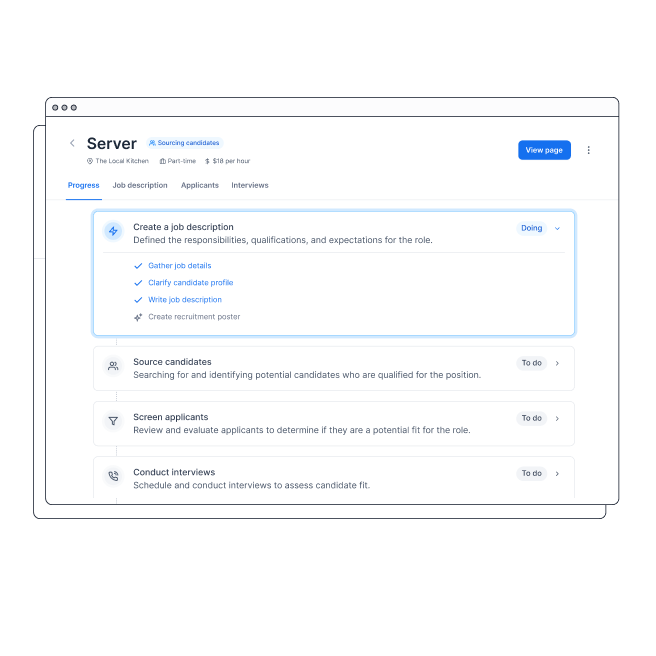
OneTeam works differently because it focuses on the parts of hiring that actually slow you down day to day. Writing job descriptions is one of those hidden bottlenecks. It seems small, but it delays everything that comes after.
You’re not jumping between systems or trying to figure out new workflows. It fits into how restaurants already operate, especially when hiring needs to happen quickly and without disruption.
Better Job Descriptions, Better Hires
Hiring in restaurants doesn’t wait until things are calm. It happens when you’re already stretched, already busy, and already trying to keep service running smoothly.
That’s exactly why job descriptions tend to get rushed. And when they do, the problems show up later in the form of weak applicants, wasted interviews, and hires that don’t last.
Using an AI job description for restaurant staff gives you a stronger starting point. You move faster without cutting corners, and you bring in candidates who actually understand the role before they walk in the door.
Over time, that shift makes hiring feel less reactive and more controlled. Fewer delays. Better fits. More time focused on the floor instead of fixing hiring mistakes.
FAQ


No setup fees.
No long-term commitment.
Create your account and start hiring.
