
Proactive Hiring With AI Candidate Sourcing
TL;DR
Most restaurants hire reactively, scrambling to fill open roles after someone walks out. Proactive hiring flips that process by keeping a steady flow of qualified candidates ready before a position opens up. With the right tools, restaurant managers can stop putting out fires and start building a more stable team.

Lyuba


Most restaurant hiring systems are designed to respond to vacancies, not prevent them from becoming problems. Recruiting begins after someone resigns, after schedules need to be rewritten, and after managers are already feeling the operational impact of being short-staffed. By that point, urgency shapes every hiring decision.
Leading restaurant operators treat hiring as an ongoing process rather than a response to vacancies. By maintaining a pool of qualified candidates, they can fill roles from a position of choice rather than urgency. This shift from reactive hiring to proactive hiring helps reduce turnover disruption, shorten time-to-hire, and create a more stable approach to staffing over time.
Why Do Restaurant Managers Fall Into Reactive Hiring?
Reactive hiring is not a decision most managers make. It is what happens when running the floor takes priority over everything else, and hiring only feels urgent once someone is already gone. Managers fall into reactive hiring the same way every time: a server quits, urgency kicks in, and the goal shifts from "find the right person" to "find someone available." That rush rarely ends well.
The operational cost compounds over time. A kitchen that trains new faces every few weeks runs slower. Front-of-house staff who cover gaps in understaffed shifts burn out faster. And managers who spend their days between service fires and hiring texts never get ahead of the problem. The restaurant staffing shortage has made reactive hiring more costly than ever. The pattern does not break on its own. It breaks when the hiring process changes before the seat is empty.

One of the reasons managers stay stuck in this cycle is that good candidate tracking rarely exists. Without a system that organizes past applicants and keeps promising candidates accessible, every search starts from zero. Restaurants that invest in applicant tracking software find that it is the foundation that makes proactive hiring possible in the first place.
What Proactive Hiring Actually Looks Like
The most effective restaurants maintain hiring momentum even when every position is filled. They keep promising applicants organized, stay connected with potential candidates, and build a pipeline that can be activated when staffing needs change. As a result, vacancies do not automatically trigger a rush to source candidates. Managers have options available, which creates more flexibility, better hiring decisions, and less operational disruption when turnover occurs.
For restaurants dealing with consistent turnover, the goal is to avoid starting every hiring search from zero. Maintaining a pool of potential candidates, keeping applicant information organized, and building repeatable hiring processes all make it easier to respond when staffing needs arise. Managers looking to strengthen that foundation should start with how to improve your restaurant hiring process before adding new sourcing tools.
This is where many operators run into a practical challenge. Staying connected with candidates and maintaining a pipeline requires time, something most managers have very little of between shifts. Tools built around AI candidate sourcing help keep that process active in the background, making proactive hiring achievable without adding another task to the day.
How Does AI Change the Proactive Hiring Equation for Restaurants?
The reason most restaurants never get to proactive hiring is a lack of bandwidth. Posting jobs, reading resumes, following up with candidates, and scheduling interviews already consume more time than most managers can give. Adding ongoing sourcing on top of that is not realistic without some form of automation running in the background.
AI candidate sourcing tools surface qualified candidates based on role, location, and experience criteria without requiring a manager to initiate every step. The sourcing happens continuously. For restaurants dealing with consistent turnover, tools built to simplify candidate flow keep the process moving even when no one has time to push it manually.
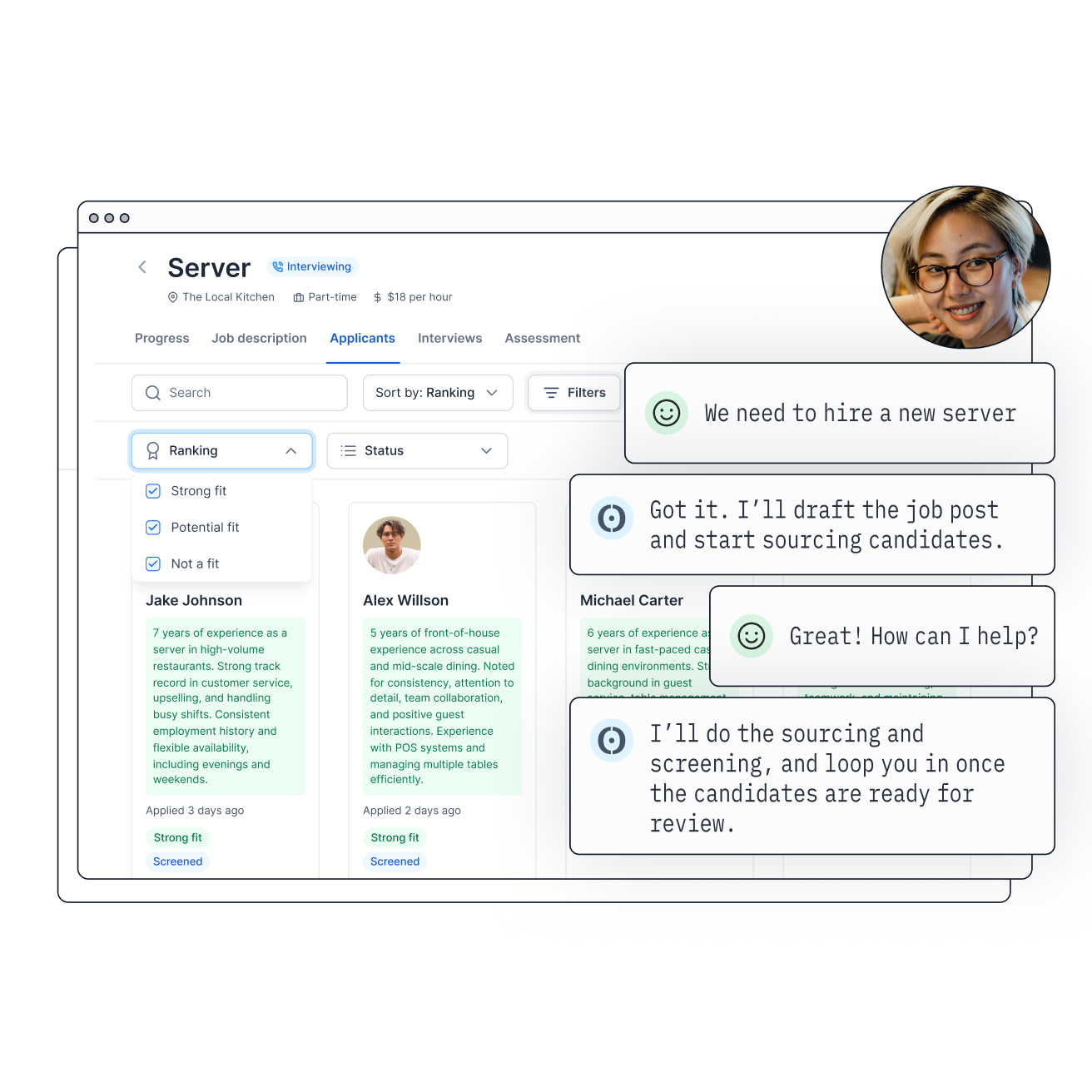
Candidates move into the process even when no one has time to push it manually. Managers who want a deeper look at candidate sourcing strategies for hard-to-fill roles will find that the same principles that apply to proactive hiring also apply to every position that consistently stays open for too long. OneTeam is built specifically for this environment. Instead of pulling managers into complicated dashboards or software they have to learn from scratch, it works the way a good support system should: quietly, in the background, surfacing what you need when you need it.
What Changes After You Start Proactive Hiring
The first thing managers notice is that they no longer have to start from scratch. When a position opens, there is already a list of pre-screened candidates ready to move. AI candidate screening handles that filtering automatically, so the candidates waiting in the pipeline have already been evaluated against the role requirements before a manager opens a single application. That immediately cuts days off the average time-to-hire.
Beyond speed, hire quality improves. When urgency is not driving the decision, managers can compare candidates against each other and choose based on fit rather than availability. That shift from "who can start Monday" to "who is actually right for this kitchen" is where retention improves. Proactive sourcing does not make every decision easy, but it does make hiring easy enough that managers are choosing between qualified candidates rather than scrambling for anyone available.
.png)
One of the biggest reasons candidates drop out of the process is slow follow-up. Automated interview scheduling sends confirmations immediately and closes the window where a candidate accepts another offer before the manager has had a chance to follow up. Fewer no-shows means fewer wasted hours and fewer shifts that go uncovered because an interview candidate never appeared.
Proactive vs. Reactive Hiring: A Quick Comparison
The Real Cost of Starting From Zero Every Time
Restaurant turnover in the United States averages around 70 to 75 percent annually. A team of 20 is replacing roughly 14 to 15 people per year. Each replacement carries a real cost in time spent posting, screening, interviewing, and training, before accounting for the service gaps that open while the seat stays empty.
Proactive hiring does not eliminate turnover. No system does. What it eliminates is the two-to-four-week dead zone between a resignation and a qualified replacement, which is where most of the cost lives. The goal is not to make a perfect hire every time. It is a process stable enough that one person leaving does not send the whole operation into scramble mode.
Proactive Hiring Starts With the Right System
Every vacancy that catches a restaurant off guard is a week of coverage gaps, a rushed hire, and another turnover cycle waiting to happen. The restaurants that stay ahead of that pressure are not lucky. They built a process that runs before the seat goes empty. OneTeam is the AI hiring assistant for restaurants that keeps that process moving in the background so managers can focus on the work that actually requires their attention.
FAQ


No setup fees.
No long-term commitment.
Create your account and start hiring.
