
Top AI Tools for Generating Job Descriptions in 2026
TL;DR
AI tools for generating job descriptions can dramatically speed up hiring, but different tools serve different needs. Some are best for fast drafts, others for customization, and some work better inside restaurant hiring workflows where speed, role specificity, and turnover matter most.

Lyuba


Writing a job description used to be one hiring task. For many operators today, it is usually the first speed test in the entire recruitment process. When restaurants need to replace a server before the weekend, hire kitchen staff fast, or open roles across multiple locations, slow job post creation can delay hiring before candidates even apply.
This is why more hiring managers are turning to AI tools for generating job descriptions, but not all tools solve the same problem. Some are built for speed. Others prioritize customization. Some free AI job description generators can create a quick draft in seconds, while broader hiring platforms may integrate job description creation directly with sourcing, screening, and the broader hiring process.
The real challenge is not simply finding an AI-powered tool that can write. It is choosing the right tool for the type of hiring pressure your business actually faces.
For example:
- A fast-moving restaurant replacing hourly front-of-house staff may prioritize speed and job-specific clarity
- A growing multi-location operator may need detailed job description consistency across roles
- A hiring manager focused on high-quality recruitment may care more about customization and experience level precision
- A restaurant balancing constant turnover may need tools that support the full recruitment process beyond writing alone
The best AI tools for generating job descriptions in 2026 are not necessarily the ones that write the longest job post. They are the ones that help hiring managers create job descriptions faster, communicate essential information clearly, and support stronger hiring decisions without adding more friction to an already demanding process.
Not All AI Job Description Tools Solve the Same Hiring Problem
Not every hiring problem starts at the same point, so not every AI tool should solve it the same way. For hiring managers, the real advantage comes less from using AI at all and more from choosing the right type of tool for the specific hiring pressure in front of them.
A restaurant filling an urgent line cook opening does not have the same needs as a multi-location operator building standardized management roles. One may prioritize speed and fast job post creation. The other may need more detailed job description consistency, stronger role customization, and better integration with a larger hiring process.
Many hiring teams make the wrong comparison here. The question is not simply which tool creates job descriptions. It is which tool creates the right kind of output for your workflow.
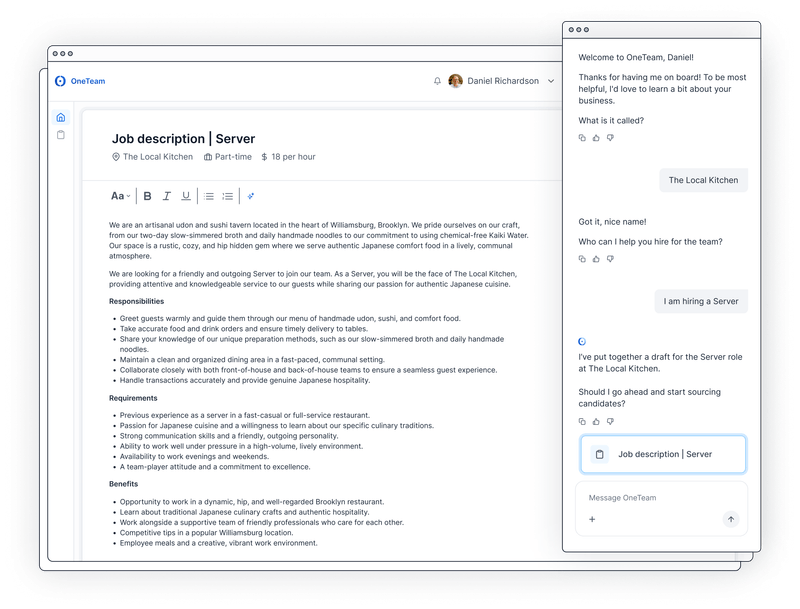
1. General AI Writing Tools (ChatGPT, Claude, Gemini)
These tools often offer the most flexibility for writing job descriptions because they allow hiring managers to customize tone, job title, experience level, and job responsibilities in real time.
Best for:
- High customization
- Detailed job description control
- Job-specific hiring needs
- Adjusting tone by role
Tradeoff:
- Requires stronger prompts
- More editing time
- Output quality depends heavily on input quality
2. Niche AI Job Description Generators
These include dedicated AI job description generator platforms, free AI job description generators, or hiring-focused writing tools designed specifically for job post creation.
Best for:
- Speed
- Structured templates
- Faster draft creation
- Free tools for quick needs
Tradeoff:
- Can feel generic
- Less flexibility
- May miss restaurant-specific nuance
3. Hiring software with built-in AI support
These broader systems may also create more value for operators focused on the long-term Benefits of AI recruiting assistant tools, especially when reducing repetitive hiring pressure matters as much as faster writing.
Best for:
- Real-time workflow integration
- Hiring process efficiency
- Larger-scale recruitment process management
- Consistency across multiple roles
Tradeoff:
- Less pure writing flexibility
- May prioritize workflow over creative customization
What This Means for Restaurant Operators
For restaurants, the right tool depends on whether the immediate challenge is:
- Filling roles quickly
- Standardizing hiring across locations
- Improving the speed of the recruitment process
- Supporting broader hiring systems
A fast draft may help replace a host today, but a broader platform may create more long-term value when turnover stays high, and hiring managers need more than writing speed alone.
ChatGPT vs Niche Generators vs Hiring Software: Which AI Tool Is Actually Best?
Once hiring managers understand that different AI tools solve different problems, the next question becomes more practical: which option actually makes the most sense for your hiring process?
The answer often depends less on which platform is “best” overall and more on which tradeoff matters most right now. In most cases, the real decision comes down to balancing speed, customization, and workflow.
If Speed Matters Most
For operators who need to create job descriptions quickly, especially when replacing hourly restaurant staff or posting multiple openings fast, niche AI job description generator platforms or free AI job description generators can often deliver the fastest turnaround.
Best for:
- Fast job post creation
- Immediate hiring needs
- Basic job title and responsibilities
- Free tools for quick drafts
Limitation:
These tools often prioritize speed over nuance, which can create job posts that feel too broad or generic for specialized hiring.
If Customization Matters Most
For hiring managers who need more control over tone, detailed job description quality, experience level, or role-specific expectations, ChatGPT and similar AI-powered tools often provide stronger writing flexibility.
Best for:
- Customizing front-of-house vs back-of-house roles
- Tailoring job responsibilities
- Adjusting for culture or employer brand
- Creating more job-specific output
Limitation:
More flexibility often means more prompt quality matters, and writing speed can slow if too much editing is required.
If Operational Scale Matters Most
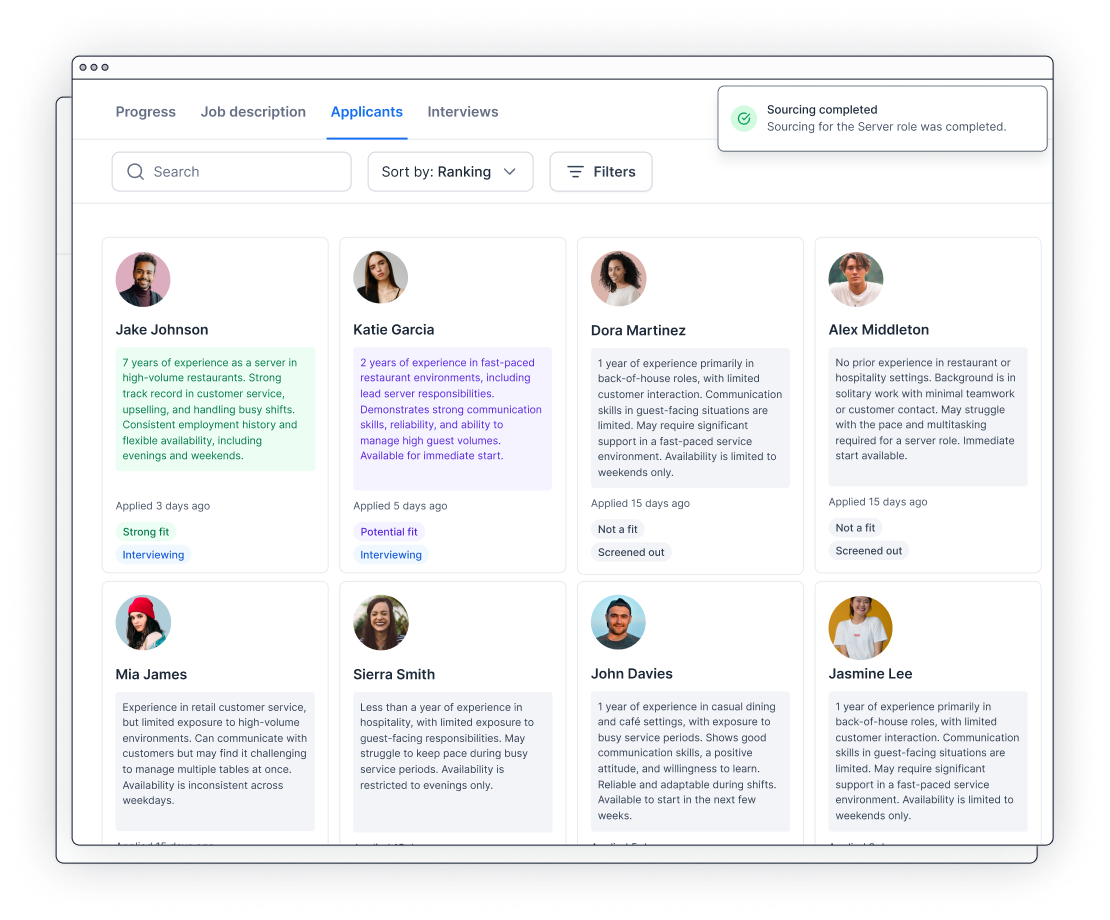
For restaurants or operators managing frequent turnover, broader hiring platforms may create more value when job description generation connects directly to sourcing, screening, and hiring coordination.
Best for:
- Multi-location hiring
- Recruitment process structure
- Real-time hiring workflow
- Consistency across multiple openings
Limitation:
These systems may not always produce the most customizable writing, but they can reduce friction across the wider hiring process.
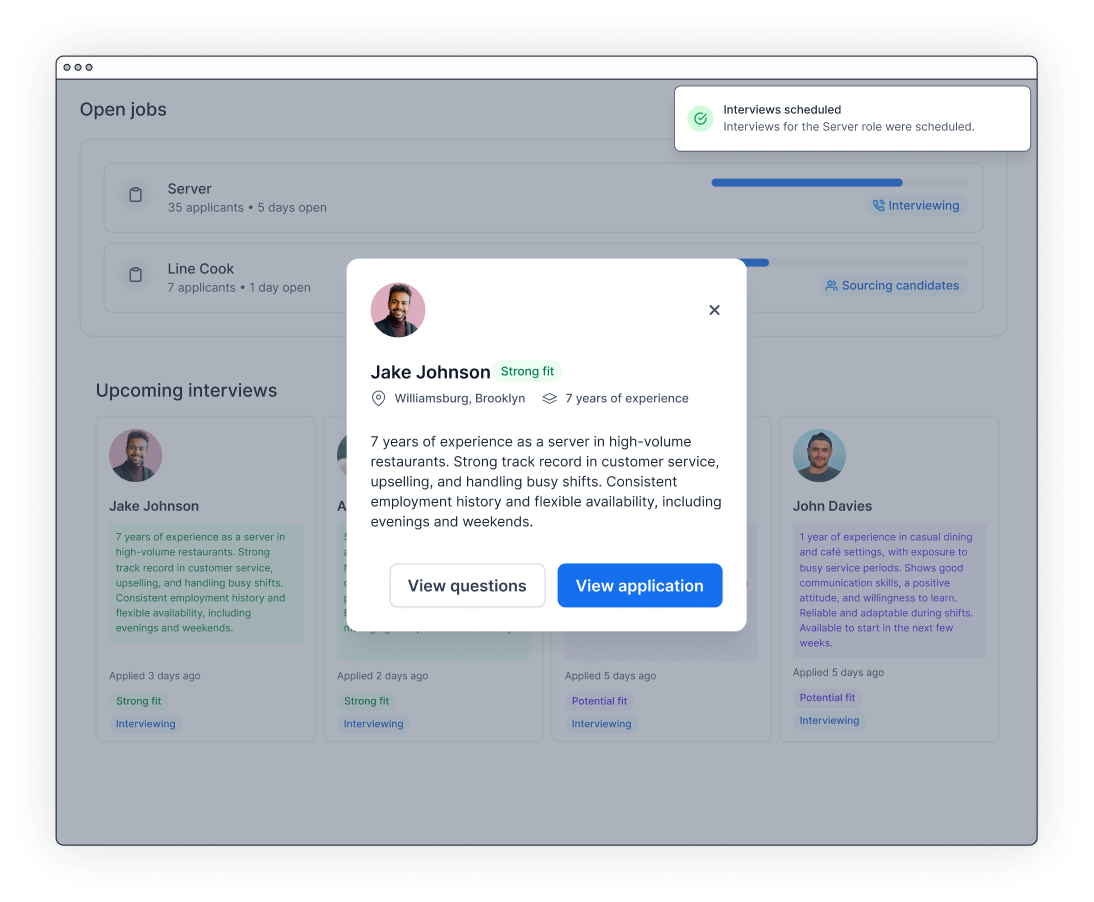
For restaurant operators hiring frequently, this is often where broader systems like OneTeam AI Hiring Assistant become more relevant. Instead of treating job post creation as a standalone task, tools connected to Candidate sourcing software or Automated Candidate screening can help reduce delays between writing, posting, and moving candidates through the hiring process faster.
Which Tool Fits Which Hiring Pressure?
Choose niche generators when:
- You need speed immediately
- You are posting high-volume hourly roles
- Basic structure matters more than deep customization
Choose ChatGPT when:
- You need stronger job-specific nuance
- Hiring quality matters more than raw speed
- You want more control over tone and detail
Choose hiring software when:
- Hiring is frequent
- Process bottlenecks are bigger than writing speed
- You need broader recruitment process support
In practice, the right platform often comes down to where your hiring process slows down most, whether that is creating job posts quickly, improving candidate quality, or reducing manual hiring tasks across multiple locations.
Best AI Tools by Real Restaurant Hiring Scenarios
Restaurant hiring pressure changes fast. One week, the priority is replacing a no-show before dinner rush. Next, it is building a more consistent hiring system across multiple locations.
That is why the strongest AI tools are not always the ones with the most features. They are the ones that fit the specific hiring situation your restaurant is dealing with right now.
Best for Replacing a Server Before Friday Rush
When restaurants need to fill front-of-house roles quickly, speed usually matters more than heavy customization. In these situations, niche AI job description generators and free tools can help hiring managers create job posts fast without slowing down operations.
Strongest fit:
- Last-minute hourly hiring
- Front-of-house openings
- Fast draft creation
- Immediate staffing gaps
Watch for:
- Generic tone
- Limited role customization
- Less detailed expectations for candidates
For restaurants dealing with reactive hiring, speed-focused tools can help reduce delays between realizing a staffing gap and getting a job post live.
Best for High-Turnover Hourly Hiring
Restaurants constantly hiring hosts, servers, runners, or kitchen staff often need more consistency across multiple job posts. In these cases, hiring software with built-in AI support may create more value than standalone generators.
Strongest fit:
- Repeated hiring needs
- Ongoing turnover
- Multiple active job openings
- Structured hiring workflows
These systems can help reduce repetitive manual work while supporting Candidate sourcing software and Automated Candidate screening throughout the hiring process.
.png)
Best for Opening a Second or Third Location
As restaurants expand, hiring usually becomes less about filling one role and more about maintaining consistency across locations.
Operators opening additional locations may benefit more from hiring platforms that help standardize job responsibilities, experience level expectations, and recruitment workflows across multiple teams.
Strongest fit:
- Multi-location restaurants
- Standardized hiring
- Consistent job descriptions
- Larger-scale recruitment process management
At this stage, operational consistency often matters just as much as writing speed.
Best for Managers Who Hate Reading Resumes
Many restaurant managers do not want to spend hours reviewing applications, scheduling interviews, or sorting through unqualified candidates during a rush.
This is where broader hiring systems may create more value than standalone writing tools alone. Instead of only helping create job descriptions, these platforms can support AI in making faster hiring decisions by helping operators move candidates through sourcing and screening faster.
Strongest fit:
- Time-strapped managers
- High application volume
- Faster screening workflows
- Reducing manual hiring tasks
For restaurants already overwhelmed by turnover and scheduling pressure, reducing manual hiring friction is often more valuable than generating a slightly better-written job post.
The Best AI Tool Depends on What Your Hiring Process Actually Needs
For restaurant operators, the stronger choice is usually the tool that matches the actual hiring pressure behind the job post, whether that means filling urgent hourly roles fast, improving consistency across locations, or supporting a broader recruitment process.
In practice, the right tool often depends on what matters most:
- Speed for immediate openings
- Customization for job-specific clarity
- Consistency for multi-location hiring
- Workflow support for sourcing, screening, and long-term hiring scale
A fast draft may solve today’s staffing gap, but restaurants managing frequent turnover often need more than faster writing alone. This is where broader systems can create more value, especially when job description creation supports AI making faster hiring decisions across sourcing, screening, and hiring coordination. That is one reason restaurant-focused hiring platforms like OneTeam are becoming more relevant for operators trying to reduce manual hiring pressure across the entire recruitment process.
FAQ


No setup fees.
No long-term commitment.
Create your account and start hiring.
